Tag: Plant Profiles

  • Plant Profile: Guinevere the Echeveria

    Plant Profile: Guinevere the Echeveria

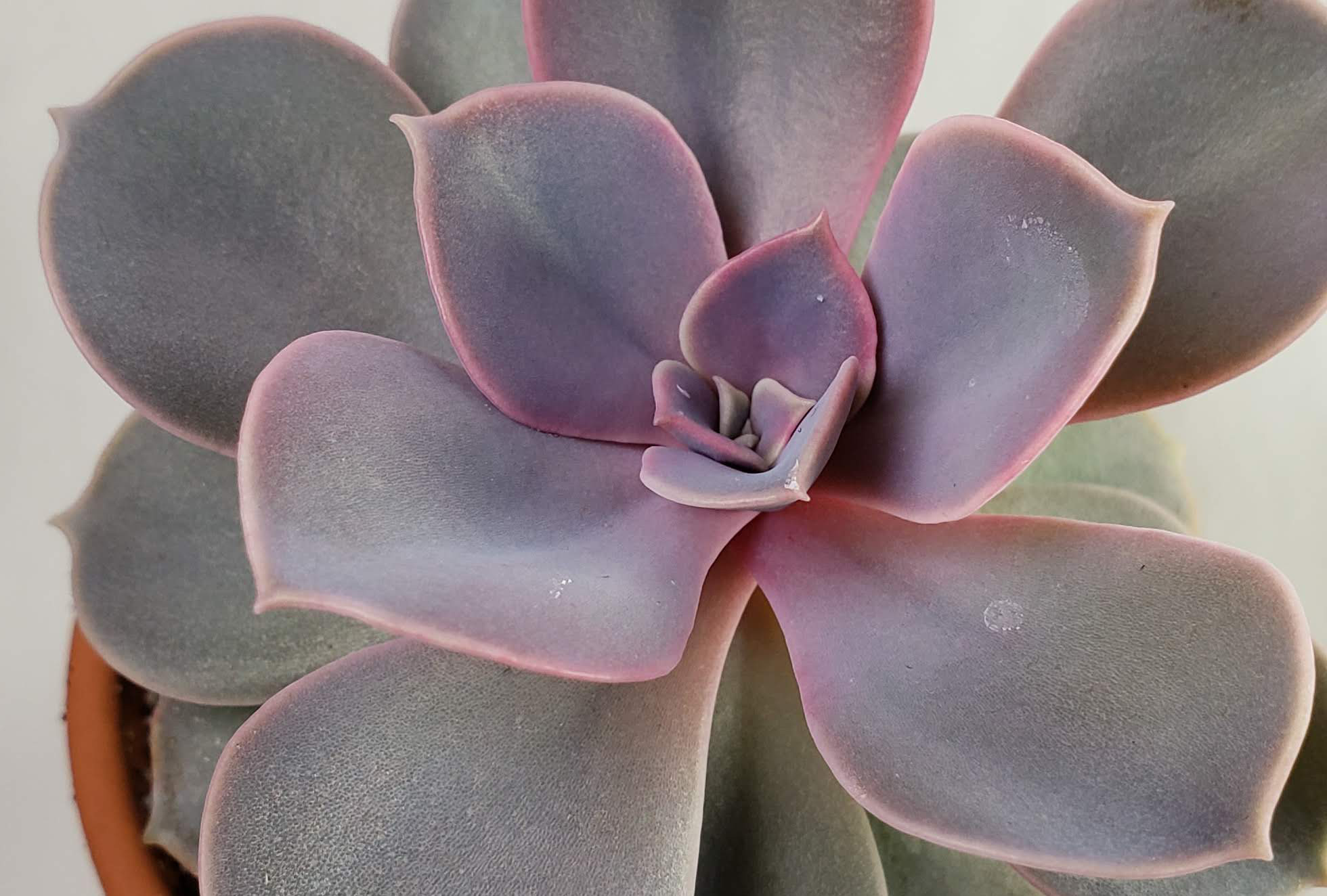
    Meet Guinevere, the Echeveria “Perle von Nürnburg”! This is a series of plant profiles based on the houseplants in my collection. For each, I’ll take you through some basic plant facts and care information (jump to) based on my research and personal experience!

    Echeveria "Perle von Nurnberg"
    Floating in spaaace

    The Science Stuff

    Echeveria are easy-grow succulents. Commonly called “hens and chicks” by gardeners, they are very popular ground cover plants! There are also scores of varieties out there to meet your personal taste. Echeveria “Perle von Nürnberg” is a hybrid of E. elegans and E. gibbiflora “Metalica” (probably) developed in Germany in the 1930s.

    These guys are also super simple to propagate. Just gently pull off a healthy leaf, set it on the soil, and you’ll probably have a new plant in a few weeks. Alternately, you can replant the top of a plant: cut off the top few inches, clear the leaves off of the bottom inch or so, and stick that puppy in some soil. Done. This method is great if your plant didn’t get enough light and has gotten leggy. You can save the plant, and fix her look!

    One thing you don’t want to do is touch the leaves of an Echeveria “Perle.” They have a very delicate waxy coating that will come off at the slightest provocation. Use care when handling!

    Echeveria "Perle"
    Showing off her beautiful colors and stem (scandalous!). Also note the shiny edges on some of the lower leaves, where the coating has been damaged.

    Echeveria are not on the ASPCA’s list of toxic plants.

    Guinevere the Echeveria

    I am a big fan of folklore and mythology, which you might start to see with some of my plants’ names. Guinevere, as you may have guessed, is named for the Arthurian queen (whom I think medieval writers did pretty dirty). But don’t worry – I haven’t separated her from her court. She lives on a sill with other inhabitants of Camelot.

    Care

    • Water: As with all succulents, Echeveria don’t like to be wet. Let the soil dry completely between waterings, and then water by thoroughly drenching; water should be running out of the drainage hole. This means that you won’t have to water as much in winter, when cooler temps plus less light means the soil dries slower! In addition, try to avoid watering on the leaves; water can easily get trapped, causing rot.
    • Light: Yes! Echeveria love light! And without sufficient light, they can start to lose some of their beautiful colors. For instance, “Perle” will start to lose her signature pink blush. Additionally, low light will make your plant etiolate, or grow very leggy in its quest for more light. Find a sunny spot, such as in the sill of a south-facing window (assuming you’re in the Northern Hemisphere).
    • Temperature: In contrast to most other succulents, Echeveria are relatively cold-hardy. They can even withstand temperatures down to freezing for limited periods of time! But they grow better in warmer temperatures, around 65–75°F/18–24°C (50°F/10°C in winter)
    • Humidity: Low. Very high humidity and/or wet soil can start to rot your poor little Echeveria.
    • Food: If you wish, feed with a diluted fertilizer every month or so in the growing season. I’ve read that younger plants are nitrogen sensitive, so try to limit that.
    • Container: Well draining soil is a must. Use a cactus mix, or make your own by mixing standard potting soil with perlite 1:1. It’s also a good idea to grow these cuties in unglazed terra cotta, to maximize drying. And, of course, make sure there’s a drainage hole! Additionally, make sure the bottom of the plant is clear from old leaves to prevent any fungal growth.

    My Thoughts on Echeveria “Perle”

    I’m in love with this plant. I think she’s the prettiest little thing, and I confess that sometimes I just sit and stare at her (she’s a plant, she doesn’t mind, OK). Echeveria are also super easy to care for, if they get enough light.


    Like this? Check out some more plant profiles!
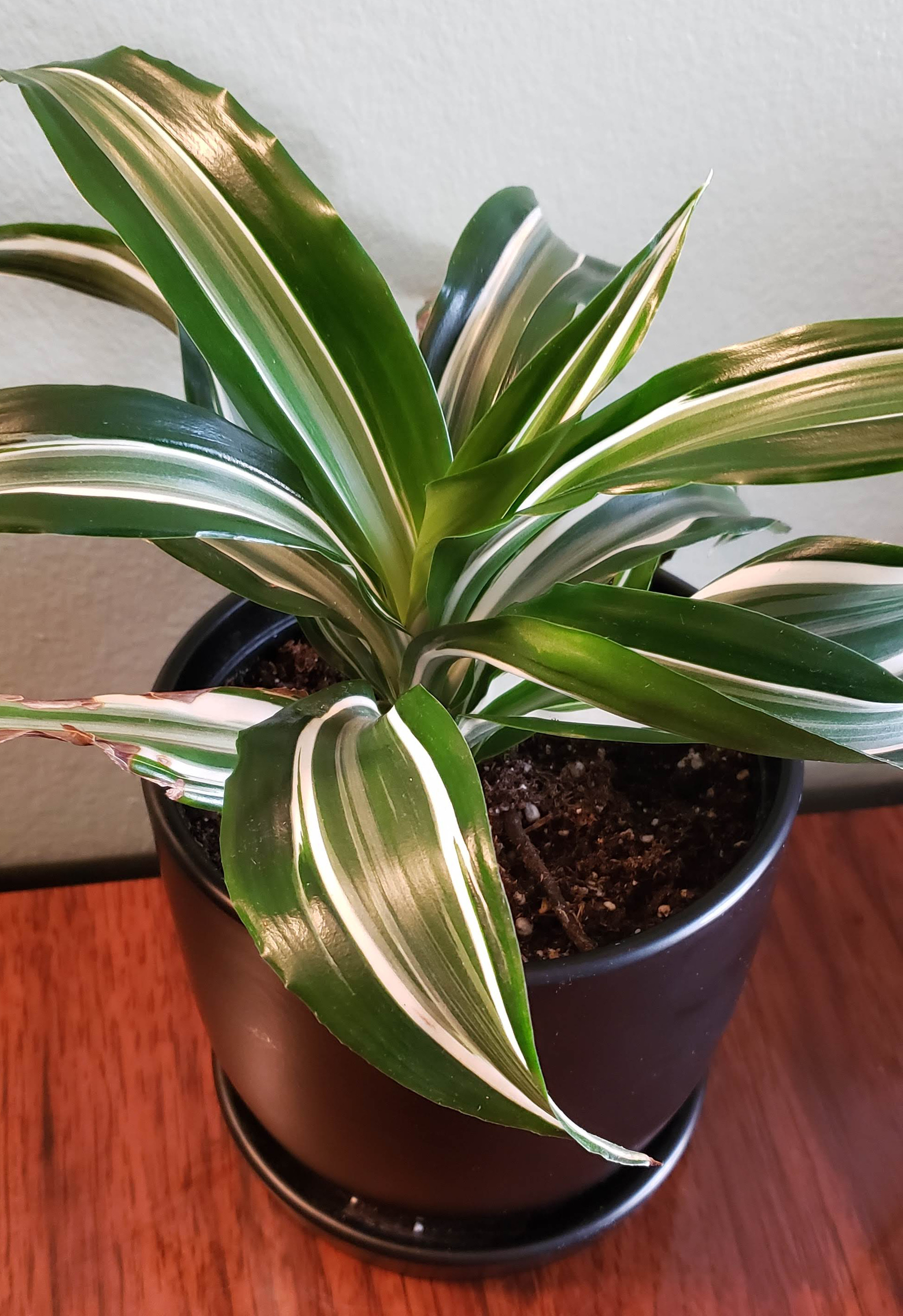
  • Plant Profile: Esmeralda the Dracaena

    Plant Profile: Esmeralda the Dracaena

    Meet Esmeralda, a Dracaena White Jewel! This is a series of plant profiles based on the houseplants in my collection. For each, I’ll take you through some basic plant facts and care information (jump to) based on my research and personal experience!

    Science Stuff

    Dracaena “White Jewel” is a varietal of Dracaena fragrans, or Dracaena deremensis (same thing, different name, that’s what makes science fun). Dracaena is a large genus of plants mostly native to Africa, with some from southern Asia and Northern Australia and two from Central America. It can be broadly split into two parts: tree Dracaena (guys, these are called Dragon trees, I’m not even kidding) and shrubby Dracaena. D. fragrans is in the latter shrubby category.

    Dracaena fragrans is native to tropical Africa, where it grows in the understory of rainforests. It grows as a single stalk until it is either broken or it flowers, at which point it branches out into two or three stalks. You can propagate Dracaena by chopping off a stem, drying it, and rooting it in wet sand. I’ve never tried this though.

    As the name implies, Dracaena fragrans is a flowering plant, but “White Jewel” is known more for its foliage than its flowers. Other fragrans have showier flowers, according to my Really Great Research. Some attract hummingbirds, which is pretty cool.

    Dracaena are toxic to cats and dogs, and not great for humans either.

    Esmeralda the Dracaena White Jewel

    Esmeralda the Dracaena White Jewel

    Esmeralda has been quite slow growing, as is typical of Dracaena “White Jewels”. Dracaena are frequently found on lists of easy-grow houseplants, and I would agree with that assessment. She has a few sticking points of care, but in general she’s very tolerant!

    Care

    • Water: Keep the soil moist but not soggy. In winter, you can back off watering a bit more, waiting until the top two inches of soil is dry. Very important: Dracaena are very sensitive to chemicals commonly found in tap water, specifically fluoride, so definitely use distilled or filtered water. You can see some fluoride damage on some of Esmeralda’s older leaves (below; the yellowing on the right leaf is from age), from before I switched to filtered water.
    • Light: Put your Dracaena in a bright spot out of direct sunlight for best results. Direct sun can burn the leaves. It will happily tolerate lower light though, it just won’t grow as quickly!
    • Temperature: Dracaena like room temperature, around 65-75°F (18-24°C). Keep it above 55°F (13°C), and away from drafts.
    • Humidity: Normal household humidity is acceptable, but your Dracaena White Jewel will appreciate somewhat higher for optimum health. Remember it’s native to rainforests!
    • Food: Feed about every other week during the growing season with diluted food.
    • Container: Pot your Dracaena in well-draining but rich soil. Esmeralda is in a glazed ceramic pot, which doesn’t drain as quickly as I would prefer, but she’s been happy enough in it. As usual, make sure the pot isn’t too big, especially if you’re not using a porous material.

    My Thoughts:

    As long as you keep them warm and fluoride-free, Dracaena are really easy grow plants! There are other varieties if you don’t like the look of “White Jewel” (I’ll judge you if you don’t though, just look at her). Other common names for Dracaena are corn plant, Chinese money tree, or lucky bamboo, if you’re in the market!


    Like this? Check out some more plant profiles!

  • Plant Profile: Callie the Calathea “Freddie”

    Plant Profile: Callie the Calathea “Freddie”

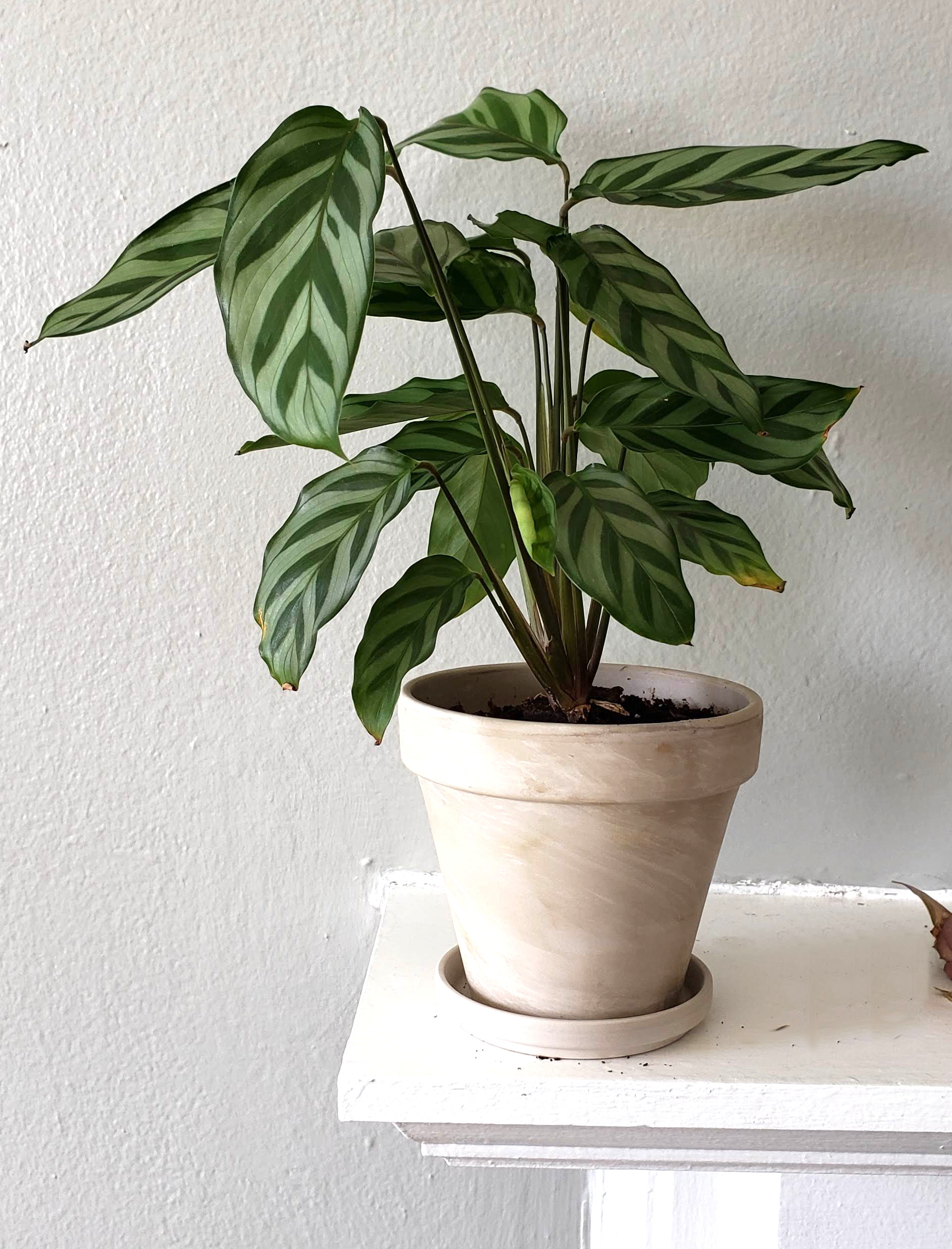
    Meet Callie, a Calathea “Freddie”! This is a series of plant profiles based on the houseplants in my collection. For each, I’ll take you through some basic plant facts and care information (jump to) based on my research and personal experience!

    Science Stuff

    From what I can tell, the scientific name for “Freddie” is Calathea concinna, but mostly you’ll just see Calathea “Freddie” on the label. Calatheas are native to tropical regions of the Americas, where they are cultivated for their large and strong leaves. One species is used in Guatemala to wrap tamales, another is used in Brazil to wrap fish. A full grown Calathea can reach up to three feet high, but houseplants can struggle to reach that size.

    Calatheas are also sometimes called prayer plants (along with some other close relatives), because their leaves fold up at night. Some varieties fold more than others; in my observation, “Freddie” doesn’t fold up very much, if at all. However, they still have the distinctive joint at the base of the leaf, which you can see below.

    Many Calatheas have pink or purple undersides to their leaves, but “Freddie” does not

    Calatheas are non-toxic.

    Callie the Calathea “Freddie”

    I’ve had Callie for about 9 months now. She was tucked behind some pothos at the nursery, unlabeled and orphaned; so naturally, I bought her. At that time I was just starting to get into houseplants, and it took me some time to figure out what she was! Thankfully, I managed to not kill her before then, because Calatheas can be rather finicky as it turns out.

    Calathea “Freddie” is relatively easy to care for, compared with some other Calatheas. They’re still not the easiest houseplant to grow. For instance, they’re susceptible to soil gnats by virtue of their preferred growing conditions, they can attract spider mites in spite of their preferred growing conditions, and getting water levels right can be tricky. However, their beautiful foliage can make it worth it!

    Care

    Calathea leaf unfurling
    New leaf unfurling
    • Water: Calatheas like to stay evenly moist, but not wet. They are also sensitive to chemicals commonly found in tap water, so it’s best to water them with distilled or rain water. I personally use filtered water, and that seems to work well enough. Cold water can also shock the plant, so use room temperature for best results.
    • Light: As they are native to forest floors, Calatheas do best in general in indirect medium light. “Freddie” was apparently developed to do better in lower light conditions, and my Callie seems fine in very indirect light.
    • Temperature: Calatheas are very cold sensitive, as in don’t let them get below 60°F/16°C. They are happiest around 65-80°F/18-27°C.
    • Humidity: Higher humidity is better for these divas. This can however make them susceptible to fungi and soil gnats, both of which love the wet, so keep a careful eye out.
    • Food: Calatheas are sensitive to synthetic fertilizers, so either dilute or use an organic food of some kind. I haven’t had too many problems with this though.
    • Container: The best container depends a bit on your own habits: if you tend to overwater, clay is better, but if you underwater, plastic/glazed is better. Use a soil mix that drains well if you go for a non-porous container, though. A wider pot is better too, especially if you want your Calathea to grow bigger – she needs room to spread out!
    Happy leaf!

    My Thoughts:

    I only recently repotted Callie from her nursery (plastic) pot into her current pot, which is made out of granite clay. These pots seem to be less porous than traditional terra cotta style, but still do wick moisture out of the soil. And they look great too! So far she seems very happy.


    Like this? Check out some more plant profiles!
  • Plant Feature: Aloe Vera

    Plant Feature: Aloe Vera

    Meet the mighty Aloe vera: the plant you might need most after my latest rehearsal etiquette installment. This is a series of plant profiles based on the houseplants in my collection. For each, I’ll take you through some basic plant facts and care information (jump to) based on my research and personal experience!

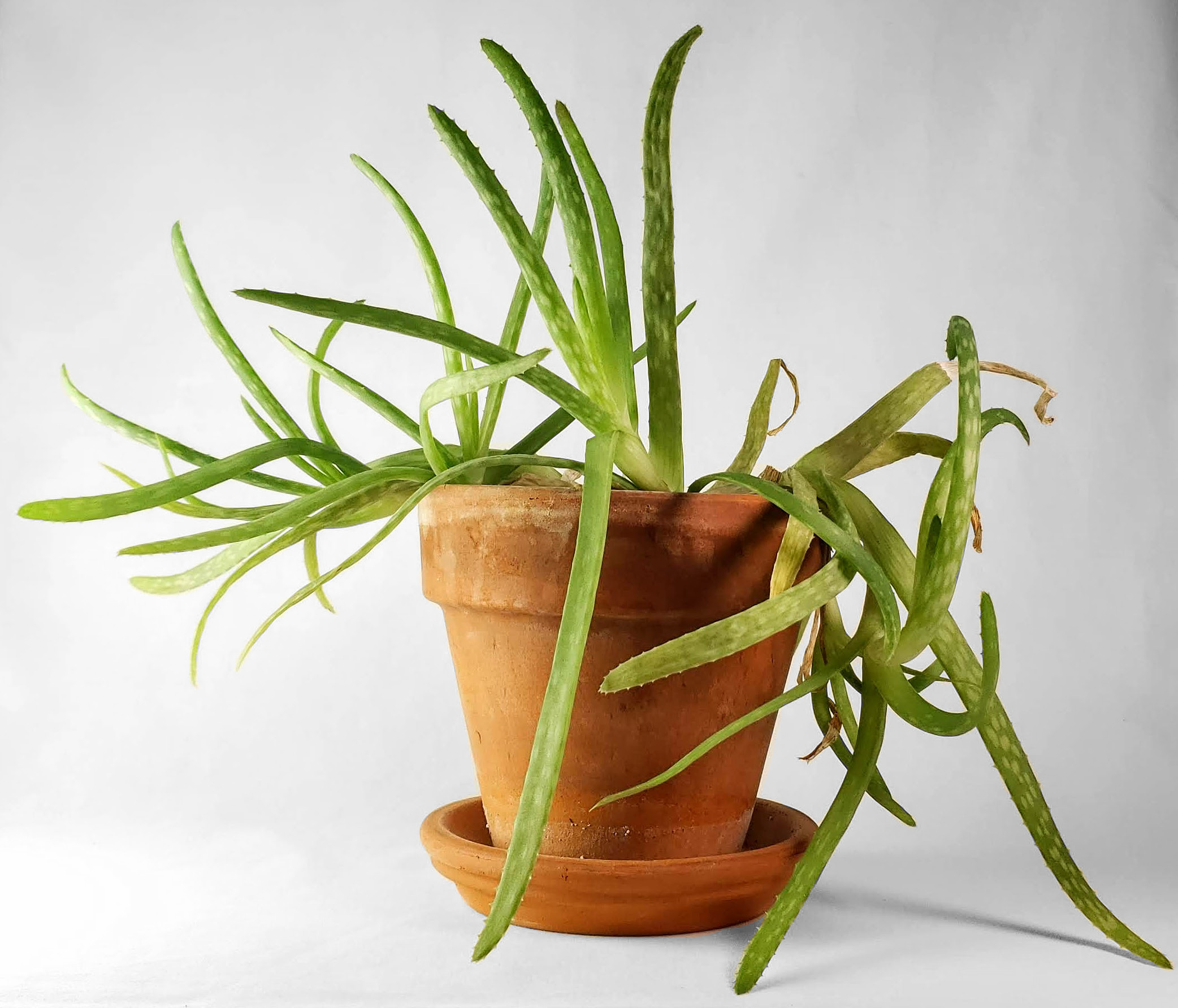
    My aloe don’t have individual names, because they keep making babies faster than I care to come up with names. Instead I call them the Aloe Collective and… well, ignore them a lot. Right now they aren’t the healthiest lot of aloe in the world, but they’re all still alive! Small victories!

    The Science Stuff

    In my definitely expert opinion, Aloe vera suffers from a condition called Being Way Too Popular For Way Too Long. Scientific info for this plant is kind of a mess, owing to a long history of cultivation around the world. It used to be called Aloe barbadensis, and is still sometimes called that today despite no longer being the official designation. The Plant List has several more names for Aloe vera, all referring to the same plant (probably).

    Aloe vera is probably from Northern Africa and/or the Arabian Peninsula, but thanks to human activity it has been naturalized to not just other parts of Africa (including islands like the Canaries and Cape Verde) and the Mediterranean region, but also equatorial areas of the Americas, Australia, and China. The spotted form is called Aloe vera var. Chinensis, supposedly descended from the cultivars introduced to China in the 17th century.

    Aloe vera is credited with an incredible number of uses that I don’t care about, so you can look elsewhere for those. The important part of the plant is the clear gel inside the leaves. The outer skin of the leaf contains a laxative, and might be carcinogenic. Miracle cure away, you hippies!

    Aloe vera is toxic if ingested.

    The Aloe Vera Collective

    My aloe are descended from a plant that my Grandma gave me. They’re all still in a juvenile stage, and seem content to stay that way. This is common for aloe grown indoors. I currently have about a dozen pots of aloe, so naturally I use them to experiment with different growth conditions.

    Unsuspecting test subject: isn’t it so cute?!

    Care

    This is a good choice for inattentive plant parents. I haven’t killed an aloe yet, so you can trust me!

    • Water: Aloe are succulents, which means they don’t need a ton of water. For perspective, I have gone months between waterings and, while they don’t thrive, they do survive. For a more reasonable watering schedule, wait until the soil dries out, then water thoroughly. Don’t leave them sitting in water, or their already puny roots will rot right away.
    • Light: While these guys are supposed to be sun lovers, I haven’t had any success with keeping mine in full sun. Right now they are in medium to low indirect light, and I’m working on transitioning some to brighter indirect/part sun. They are etiolated, but not too much more than juvenile aloe are in general.
    This bad boy grew too long and fell right out of his pot — and has kept right on growing, sans roots
    • Temperature: Keep your aloe around room temperature (70-80°F/21-27°C). They are not cold hardy, so don’t leave them outside if it’s below 50°F/10°C. However, they also will struggle if it gets too hot, so don’t stick them in the oven or in full sun in July.
    • Humidity: Aloe are (probably) native to more arid regions, so humidity need not apply.
    • Food: Aloe have very little food requirements. Feeding them twice a year will be plenty.
    • Container: You definitely want to get a terra cotta or unglazed ceramic pot for these babies. They have a shallow root system (if you can call it that), so a pot as deep as it is wide is a good choice. Use a well-draining potting soil; I have one of mine potted in pure perlite, and it looks quite dapper if I do say so myself.
    Aloe vera
    Aloe relaxing in perlite

    My Thoughts:

    Aloe vera are easy-care houseplants that might have some health benefits (I would suggest keeping it topical, unless you’re feeling constipated). Getting them out of the juvenile stage can be tricky in my opinion, and they like to send out pups, but keeping them alive shouldn’t be too tricky!


    Like this? Check out some more plant profiles!
  • Plant Profile: Fred the Boston Fern

    Plant Profile: Fred the Boston Fern

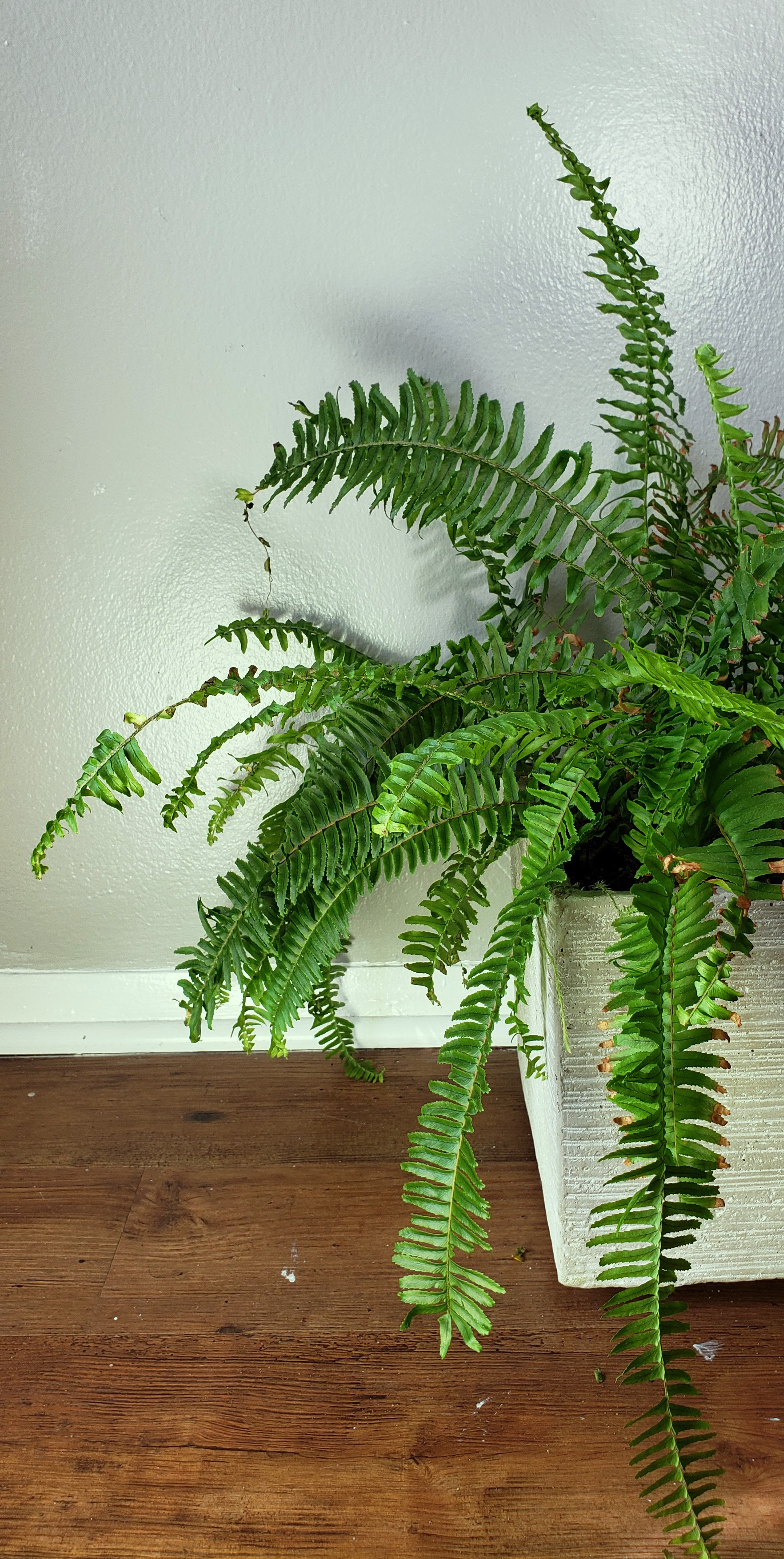
    Meet Fred, a Boston Fern! This is a series of plant profiles based on the houseplants in my collection. For each, I’ll take you through some basic plant facts and care information (jump to) based on my research and personal experience!

    The Science Stuff

    Fred’s scientific name is Nephrolepis exaltata “Bostonienses,” a subset of sword ferns. He is native to the tropical regions of the Americas, including the West Indies. Nephrolepis ferns can grow both terrestrially and as an epiphyte, meaning they’re happy growing in soil like a “normal” plant or they can attach themselves to another plant, usually a tree. Some other common epiphytes are Spanish moss and many species of orchids. They can derive the necessary water and nutrients from the air and rain, which means they are not parasitic and do not harm their host plant!

    Most ferns reproduce through spores, but “Bostoniensis” is a slight mutation of N. exaltata and its spores are often too unstable to be viable. Instead they are propagated by dividing the root ball or separating off the runners once they have rooted and become established.

    Fred is a couple years old, and currently recovering from a rough winter. Thankfully, Boston ferns are some of the hardiest ferns, and they’re happy to come back even from the brink of death! They are popular in hanging baskets or on ledges, where the fronds can trail over picturesquely. While they can be grown outdoors when it’s warm, Boston ferns love being houseplants in more temperate climates. They are also efficient air cleaners!

    Boston ferns are non-toxic for cats and dogs.

    Boston Fern Care

    Boston fern

    While Boston ferns are not the most easy-care houseplants, they are relatively forgiving of mistakes!

    • Water: Keep the soil consistently moist but not saturated. It can take less water in the winter, waiting until the surface soil is dry. For best results, use room-temperature rain or filtered water.
    • Light: While not a full-sun plant, Boston ferns like bright indirect light with some limited direct sun. They will not do well in full shade.
    • Temperature: Remember that this is a tropical plant! Stay around room temperature (60–80°F/16–26°C). Having some day/night temperature fluctuation can actually promote growth, but make sure it stays above 50°F/10°C.
    • Humidity: This is probably the biggest issue for these ferns. They prefer to be at or above 80% humidity with no drafts, so regular misting is important!
    • Food: Feed your Boston fern every month or so in the growing season with normal strength plant food. You can back off in the winter when you also back off on watering.
    • Container: Choose a container that will help retain water, such as plastic or glazed ceramic. Repot in a moisture-retaining potting medium and only when it is completely root bound, and make sure the root crown is exposed to air to prevent rotting. It can be helpful to double pot these ferns with a pad of sphangum moss between the containers to help retain moisture, especially in hot (outdoor) conditions.

    Fred Success!

    Onwards and upwards!

    I’ve made some mistakes with Fred, but he’s recovering well. You’ll note that he is still in a too-large container, but with some love he’s quickly growing into it! He still has some older fronds that need pruning (the ones with the brown leaf tips), which will also help promote new growth. Now he’s in a brighter, less drafty area, and I have high hopes that this winter will be less stressful than last!

    Like this? Check out more plant profiles!
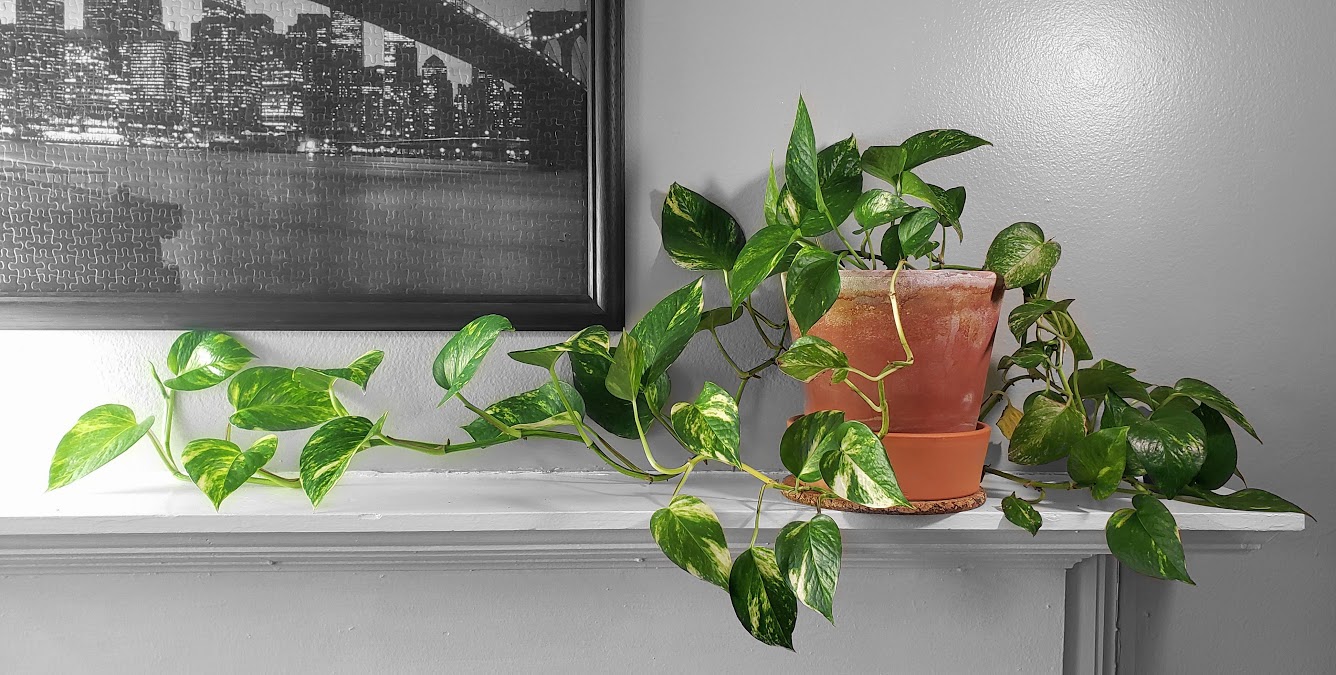
  • Plant Profile: Phil the Pothos

    Plant Profile: Phil the Pothos

    Meet Phil, a Golden Pothos! This is a series of plant profiles based on the houseplants in my collection. For each, I’ll take you through some basic plant facts and care information (jump to) based on my research and personal experience!

    The Facts

    First, the dry stuff. Phil is an Epipremnum aureum, commonly known as a Golden Pothos or Devil’s Ivy. He is native to the island of Mo’orea, part of the Society Islands of French Polynesia (Mo’orea is the nearest neighbor of Tahiti). E. aureum is technically a flowering plant, but is genetically unable to produce flowers without exposure to certain hormones [PDF]. Pothos are on NASA’s list of clean air plants, reportedly removing chemicals such as benzene, formaldehyde, and xylene from the air [PDF].*

    Pothos are frequently labeled as Philodendrons in stores, but while they share some similar features and habitat needs, they are not the same. Both are members of the family Araceae, but belong to different genera. Philodendrons are native to tropical regions of the Americas, and do flower without assistance.

    The ASPCA lists pothos plants as toxic to cats and dogs.

    Pothos surface growth
    New growth at root level

    Propagation and Cultivation

    Our pothos Phil was grown from a cutting taken about two years ago from a healthy parent plant. Rooting new pothos from cuttings is super easy! Just lop off a section of vine that includes a rootlet (pictured below) and a couple leaves and stick it in some water, keeping the leaves dry. Make sure you change the water for fresh water occasionally, and keep it in a moderately warm place out of direct sunlight. In a couple weeks it will have grown some awesome new roots, and you can then plant it in soil. EZ PZ.

    Pothos branch close-up
    Branch detail: an older section of vine that has dropped its leaves, showing root nubs and new growth from an old leaf joint

    While pothos are known for their long trailing vines, it’s good to do some light pruning to keep your plant from getting too leggy. Pruning also encourages growth farther up the vine (see picture of root level growth), giving you a bushier looking plant. The long vines that you do have can be trained up a trellis or allowed to spread horizontally.

    Care

    Pothos new leaf
    New leaf unfurling at the end of a vine

    Now the important stuff. How do you care for a pothos?! I’ve picked Phil as the first plant profile because pothos plants are dead easy to care for. Forgot to water? Eh, whenever you get around to it. Not enough light? Eh, that’s ok. Don’t have plant food? Whatevs. Your pothos will keep hanging out. They’re apparently called “Devil’s Ivy” because they refuse to die, although I’ve got to say that is not the first quality that comes to mind when I think of the devil.

    However, if you want your pothos to THRIVE (and of course you do!), here’s the rundown:
    • Water: While your pothos will tolerate missed waterings, they do prefer to stay on the moist side of life. Wait until the top inch of soil is dry to keep from overwatering, and use a well-draining soil mix.
    • Light: Again, pothos tolerate low light, but they do better in medium to bright indirect light. Full sun will burn the leaves, but they will also begin to lose their variegation (that’s the pretty color variations on the leaves) in low light.
    • Temperature: The average yearly temperatures on Mo’orea are between 70°F and 88°F (21°C – 31°C), will almost no seasonal variation. Your pothos will thank you if you keep it at room temperature, no lower than 65°F (18°C).
    • Humidity: Pothos are flexible in their humidity needs, but they will generally be happier around the higher end of normal household humidity (50–60%).
    • Food: It’s probably best to feed your pothos at least twice per year, spring and fall. However, feeding more will encourage faster growth!
    • Container: I have Phil in an unglazed clay pot. It’s on the large size for him, with room to grow, so the lack of glazing helps the soil dry out and keep from getting soggy. Pothos have a relatively small rootball, so a properly sized container made of a lighter material (such as plastic) can be a tipping hazard.

    If you live in a tropical climate zone, you can grow pothos outdoors. However, it is considered an invasive species in many of the countries where it has been introduced, so keep it contained.


    *See further studies by B. C. Wolverton for more details


    Like this? Check out some more plant profiles!