Tag: Social Commentary

  • The Story of Democracy?

    Before we start: hey there, Thought Readers. It’s been a while. How’s it hanging? World seems great right now. Rest assured, though, that I have not abandoned you. I did move to a new city and start a new job and have to get a new computer (RIP my dear 2009 MBPro, you were a champ) and for some reason those things had a bit of an impact on my creative process. No idea why that would be. Anyway.

    I’m planning on being back this year, exposing my Thoughts to the oxidizing light of screens. I have plenty of them hanging out in various states in my drafts, but finishing and polishing them up has been just too much of a bother for my poor delicate constitution. (If you want some behind the scenes reasons why, I will sum up by simply saying GIANT INTERNET CONGLOMERATIONS BAD and you are free to conclude from that what you will. Related note: you might want to subscribe to the email version if you aren’t already to keep seeing these. If you want to keep seeing these.)

    I have also realized that one of my big sticking point for posting my thoughts is that I struggle with conclusions. Not wrapping the post up, I mean my brain is telling me that I need to find a way to conclude, as in, idk, a solution?? So here is the first New Year’s Resolution that I have made in maybe my entire life: I resolve to not feel like I have to first find The Solution to the problems that I start mulling over in order to post about them. There usually aren’t solutions, and that is the whole point, you know? So if my post seem messier and more open-ended going forward, well, welcome to an even closer facsimile of my brain I guess. I’ll probably also leave in more of my tangents that I used to edit out, so buckle up. Now on to the main event.

    Humans love stories. Story is how we have made sense of life, since the dawn of humanity. The random chaos of an indifferent universe is too much for us to deal with, so we create stories to explain, to give meaning to our lived experiences. Stories also help us make sense of our internal lives. Our emotions are a different chaos than that of an indifferent universe, but they can be similarly overwhelming. 

    So what are the elements of story? A-number-one is character. Plot comes in at a distant second place, and trailing somewhere in the foggy middle distance of third place is setting. (Story nerds might yell at this point that I’m missing some major elements. Unfortunately, story nerds would be wrong, because those missing elements go under those three categories, COME AT ME NERDS. Conflict is character. Resolution is plot. Theme is literally just [just] the story, what are we doing here? You might want to think about those conceptually to write a story but that’s not what we’re talking about now. Nerds.) But wait, I hear you (non-nerds) say, isn’t story all about plot? Isn’t story The Things That Are Happening? No. If that was the case, history classes would be hot-ticket seats instead of nap time. 

    But if humans use story to explain the chaos of the universe, then isn’t that almost necessarily plot-driven? Isn’t that explaining The Things That Are Happening? The sun rises because a god drives his chariot across the sky, or because an eagle opens its wings. The world was birthed by the earth mother, or created from primordial mud brought up to the surface by a giant turtle. Look at all those plots. No. Wait. Reread those examples. Those are about the characters. The important part is Helios, is Atabey, is Kisosen: the important part is the character. Story comes in as the how the characters react to circumstances; the circumstances are not the important part. Story is the because.

    In story, generally, ideally, there is a narrative structure, which ends with the main character or characters having changed in some way, or having learned some critical lesson. The key here is that there is an ending, a conclusion, some decisive denouement. The characters have found the missing piece to their lives, the conflict has been resolved, everyone can ride happily into the sunset together, or maybe everyone died horribly. The End. 

    Of course, this is not how real life works (spoiler alert). Real life just keeps going, unfettered by narrative structure. Which is… exhausting, if you think about it. We set goals for ourselves to counteract this: graduate, get a job, get married, have kids, retire, raise llamas, die. Start a band, go viral, learn a language, write a novel, start your own business, remodel your house. What’s even easier is setting goals for ourselves that other people have come up with: the expected goals. That has the added advantage of not requiring us to put thought into what we want. Just let someone else take care of the thinking. Let society mete out expectations. If enough people have gone along with them for long enough, they have to be the best options, right? If enough stories and books have described an arc from beginning to decisive end, that has to be achievable, right? And that means there is a goal to achieve. An endpoint. (But an endpoint other than death, please, we don’t want to think about that.)

    You know what also doesn’t follow a narrative structure? Democracy. And it really, really seems like it should. There are characters. There are battles. There are victories and losses, and there is progression. There are different settings and high stakes. There are all the elements you would expect to have in a story — and yet. Democracies are made up of people, real people, in the real world, which means that they are just as messy and just as arbitrary as real people in the real world. 

    Democracies demand continual care and attention. You can win a monumental victory, but that is never the end. You can never rest on your laurels. Just like your own individual life, it just keeps going, one battle to the next. Today it’s unexpected car trouble, tomorrow it’s fringe candidates trying to take over the local school board. The only constant is that it is constant. And, again, that is exhausting. More than that, it is messy. Everyone is different and has different opinions, but everyone gets a say, so there will always have to be compromises and debates. No one person gets to be the ultimate arbiter of all. 

    So maybe all the current democratic backsliding into fascism and authoritarianism makes sense. Why keep fighting election after election when, instead, you can pick the team that can win once and then be set for good? Why not pick the team that sells such a beatiful narrative — not one of constant compromises and fights, but one of Right and Wrong and Victory? Why have to constantly concern yourself with the nitty gritty ins and outs of current events, which you never have the time or energy for, when you can instead appoint someone who will simply take care of it all for you? We are already electing representatives, why not simply take that a step further?

    Now, just to be clear, I do think that democracy is a good thing. But I also think that story is essential to the human psyche, and I’m not sure how to square those two things. Can we find a different way to tell the story (so to say) of democracy? Is there a way that democracy is fundamentally at odds with how humans work, or is it more that currently our current system as a whole — society, politics, economy, everything — is what is at odds with humanity?


  • Who Are You, or Is Your Personality Your Facebook Profile?

    Who Are You, or Is Your Personality Your Facebook Profile?

    So there’s a concept espoused by Mark Zuckerborg that I keep coming back to lately. To loosely explain it, he believes that everyone needs a Facebook profile (shocker) and that one, singular profile of you should be sufficient for absolutely everything in your life because having multiple profiles would mean that you’d be somehow lying about who you really are and that means you lack integrity and like why on earth would you want to say something to your bestie that you wouldn’t say to your boss? Obviously, we know that the Zuck only exists to Win Capitalism™ and his chosen medium to achieve that is ~social media~ so it makes sense that he would want everyone to be his chattel consumer base, so I am perfectly happy disregarding everything he says.

    However. Is he right? Is it possible that, by sectioning off parts of your life (facets of your personality?) that you aren’t being true to yourself? Could it be the case that when you behave differently around your children compared to when you’re at work you lack integrity? And that’s to say nothing of possibly being a different person at age 15 versus age 50, the horror.

    The Questions

    I think all of this comes down to the questions: Who are you, and how do you know? Are you your occupation, your role in society, your preferred hobbies? Are you your gender, sexual, racial identities? Are you the culture you grew up in, or the one of your ancestors? Are you your MBTI, Big Five, Enneagram, astrological sign, Hogwarts House? Are you a cat person or a dog person? Are you the things that you have learned, or the things that you have done? Are you the things that you dream about?

    Oh, and one more question: does it matter? Is it important to be able to put a precise label on who you are?

    Personality As Labels

    All of the factors that might go into your personality serve to help define where you fit in society. They can help you find other people like you, who therefore may understand you better and make you feel accepted and seen. They can be an easy shorthand for defining what makes you you — because no one has the time for lengthy explanations.

    It also matters to companies who want to sell you things. If they can convince you that their product is for your type of person, they’re more likely to sell you on it. Having pre-defined labels and categories makes their marketing so much easier.

    What Are Labels?

    We can know that this is about making defining people easier by looking at labels that aren’t strictly one thing or another. Bisexuals face erasure and skepticism from both straights and gays. Afro-Latinos often struggle to find a place in either black or Hispanic spaces. Some people like both cats and dogs. Having identities that aren’t simple cut and dry is definitely not de rigueur

    Additionally, we know that everyone will have at least one identity that changes over time: what age you are. You won’t stay young forever, but there is an absolutely massive market dedicated to helping you stay within that identity for as long as possible. Alternately, the concept of childhood has shifted and broadened and sub-categorized in the last century or so, creating new potentially marketable identities.

    Another identity that most people will experience a shift in is ability level. Every one of us is to some extent differently abled in some fixed sense: some are short, some left handed, some neurodivergent, and so on ad infinitum. Shifting ability level can also be simply as you learn how to do things better, from literacy to playing an instrument to reading your cat’s emotions; it can also be shifting health, such as loss of mobility as you age, weakening eyesight, or as a result of disease or illness or accident.

    Personality vs. Identity

    But identity isn’t personality, which is what we were originally talking about, right? Well, maybe. Identity is the outward label we give to things that we are, while personality is built of how we are; how we behave and think and engage with the world around us. By necessity, this outward expression of our inner personalities will change based on the external situation. That isn’t a lack of integrity. That’s rational.

    So was the Zuck talking about identity or personality? What is your social media profile: a reflection of your self, your personality; or is it a collection of your identities that add up to the external expression of your self? Which is easier to commodify? And then which, if either, do we mean when we tell someone to “be yourself?”


    More on this next week.

    In the meantime, I don’t have any recent readings that directly relate to this. This Anne Helen Peterson piece covers one aspect of changing age identities. This NCHR article on social media use and mental health is applicable to everyone. This short video is to remind you that acting the same no matter the situation is unadvisable.

    And of course, if you liked this, you might also like some of my other musings on topics, like truth and reconciliation or making space. Or if you didn’t like this, sorry?


  • The Reconciliation in Truth and Reconciliation

    The Reconciliation in Truth and Reconciliation

    Last week I started in on the topic of Truth and Reconciliation by examining the truth. Now it’s time for more thoughts on reconciliation than you ever cared to read! In order to reach reconciliation, we must first have a common truth, a common history. After all, what is history but the story we tell to explain our present? The dead don’t care what we say.

    But first, the matter at hand: what does it mean to reconcile? Can we?

    Right now we have a common conception that there are two halves of society, inextricably interconnected, diametrically opposed. This is, of course, a gross oversimplification, because humans naturally struggle with complexity (more on this later). However, we do indeed have one part of our society that is determinedly sprinting towards an idealized past and hell bent on taking the rest of Us with Them. 

    Why Reconciliation?

    There is a branch of religiosity — in the US it appears as right-wing Evangelicalism — that is profoundly authoritarian. This is the religion that takes the view that letting people think for themselves is dangerous, that the only way to keep people in the faith is to keep them afraid and unable to form their own interpretations of the religion or of the world. This by definition requires a rigid and narrow interpretation of the Bible (for example) provided by People Who Know More Than You — i.e., the authoritative authorities. The people involved in these branches of religion are then naturally more susceptible to authoritarianism when it crops up in other circumstances.

    The Foundations

    As I vaguely alluded to earlier, we have facing us an Us-Them paradigm. It is built on several factors. One of them is what I’ll call the Traditional American Psyche. This is partly derived from the Puritan roots of the country, which has contributed to the Evangelicalism as described above, but it is also based on ideals of Individualism and Freedom.

    The story we like to tell ourselves of the founding of the United States is one of brave people fleeing persecution and founding a beautiful free society in which people could live as they chose. Setting aside for the moment the many, many flaws in that history, let’s first ask the obvious question: Why is it such a seductive idea to be solely reliant on yourself?

    This ideal of individualism is deeply woven into the fabric of this country. It exists not only on the personal level, like that iconically described by Thoreau, but also at the societal level. Today we are a big strong superpower that don’t need no man sorry appreciates the generous assistance of our less powerful allies, but even before we leveled up, the country had a similar-outlook-but-different-effect execution of isolationism. Same self-reliance, fewer overthrown foreign governments.

    Individualism

    One angle from which to examine this individualism is from the parochial lens, as featured in Evangelicalism. In the fly parlance of the youths, we might also call this parochialism ~toxic masculinity~. It’s where you’re the big strong country who can and does take care of everyone else, because everyone else is too weak to do it for themselves. One might even say it’s the Manifest Destiny of caring. Obviously this is because relying on someone or something else is a sign that you can’t take care of yourself, that you’re weak (implication: like a woman), that you need some sort of parental figure (implication: like a child), that you’re just not manly enough. 

    And just in case you might be confused, this isn’t like a loving kind of caring, because that’s also emasculating. This is the condescending pat-on-the-head kind of caring. Because, of course, everyone loves to be condescended to, so it makes for an excellent way to conduct social interactions!

    Is This My Blog If I Don’t Talk About Fear?

    Another angle is, of course, fear. This isn’t wholly separate from the first angle. Really it’s more of a distillation of it: why do people struggle so hard to be tough and manly? Is it because that’s the most fun way to live, or is it a fear of the perceived alternatives? Do people want to run away from things because that’s the logical thing to do, or is it easier than facing the fears that come with them? If you only have to worry about yourself and yourself alone, then whatever happens is under your control, and you don’t have to worry about what might happen outside of your control.

    However, this rugged individualism ignores the profoundly social structure of the human organism. Humans are at our best when we work together and delegate responsibilities — without condescension! — especially in such a complex society as we have today.

    Freedom

    As far as freedom goes, well. Ignoring the facts when the country was founded, women were considered property and there were, you know, actual slaves, even the white man had some limits to his freedom. Laws curtail some actions. Responsibilities also curtail individual freedoms in a way, in limits imposed by family, work, friends, neighbors. The friction here crops up often in the perceived difference between personal responsibilities and imposed responsibilities. In other words, people don’t like being told what to do; they prefer to be able to do it of their own volition.

    However. Democracy is not the same as everyone deciding for themselves: that’s anarchy. Democracy is everyone having an equal say in what the decision is.

    But wouldn’t it be great if none of those responsibilities existed and we could all run about naked in the woods owing nothing to each other??

    Bad faith arguments say that once you start imposing limits on freedom, then there is no stopping point. Once you limit one thing, what’s to stop you from limiting everything? This is the “paradox” of tolerance: you can tolerate everything except intolerance. One quick litmus test though: are your actions harming someone else? If yes, then you are curtailing their freedom to live their lives. If your pursuit of boundless freedom leaves other people with less freedom, then that’s the limit point.

    The Powers That Be

    This brings us to the people in power. To help simplify life, we elect people to represent our interests in government (or we allow the formulation of organizations tasked with our care and protection). Crucially, these representatives are not outside of the normal structure; rather, they are profoundly a part of it. The representation of your interests does not become some oThEr once it is invested in a person — it’s still your interests, still part and parcel of your live in your society. This means that they — your representatives — are emphatically not outside of the law that governs your actions (and their actions in their non-representative form), and in fact by virtue of the powers invested in them, they are held to even a higher standard. 

    Think of a concentrate of the powers and limitations of each of the people that they represent coalescing in them. In a way they become an avatar for the people they represent. This is constraining, and rightfully so. They are become the focal point of people’s belief, which is a powerful force. 

    Most of us have at some time in our lives experienced the feeling of power that comes from having other people believe in us. This is to an extent a hardwired social cue: the more people agree that something is a good idea, the safer it probably is to pursue. Thus, many people believing in us imparts more power than a single person.

    I Want To Believe

    Additionally, we have wired social cues to believe in people who have gained power. If they have successfully attained power, there’s probably a reason for that, right? That means that we have to be able to hold the circular idea that power imparts belief imparts power, and the implications of that for leaders of society.

    One of the implications that I want to highlight is the leaders’ beliefs about the beliefs of the people they represent. Naturally, leaders representing a multitude of people will have to reconcile a multitude of opinions and beliefs if they are to effectively represent everyone. However, our system is currently set up in such a way that if a leader fails to uphold that ideal of fair representation of their constituents, there is no quick or easy vote of no confidence; there is basically only the actual elections. Anything within a term limit is left to the trust in the norm that people will vote in their interests the next time. This however does rely on things like the people being actually able to vote.

    Reconciliation: tabby cat Mr. Butters sleeping very peacefully on a quilted pillow

This image has nothing to do with reconciliation and everything to do with the length of this post.
    This is a rest stop on our journey of reconciliation.

    The Truths We Avoid

    Let’s now circle back to the flaws that we set aside in our glowing portrait of the founding of this country. In the beautiful US of A, any deviation from “the norm” that you may have becomes your primary identity. And, excitingly, this is a really fun way that people outside of “the norm” have been targeted for persecution. 

    But wait! You may shout. Didn’t I say that the founders were “brave people fleeing persecution? Why yes, yes I did. Strange, that. Who could have guessed that the society of The Scarlet Letter could be intolerant?

    One feature that we often take for granted is how predictive our identities — our degrees towards or away from “the norm” — are of our political views. Why should this be the case? If each person were truly free to decide for themselves what kind of society they wish to participate in, it would make sense that demographic distributions within ideologies would be fairly equitable. However, as we all know, this is manifestly not at all the case. Therefore we face the proposal that certain political ideologies must be an anathema to certain demographics and identities.

    Personal Reconciliation

    The majority of people would say that they’re good people. People don’t generally believe, or like to think, that they’re otherwise.

    We also don’t like to be told that we’re wrong about things. We like even less actually being wrong. Then, internalizing that you’re wrong about something takes time and space to acknowledge and more to address it. All too often, we are not afforded this space of development.

    Instead, people become so afraid of being wrong (and of not getting that space to reevaluate) that they retrench into their established misbeliefs. This feels to them safer than trying to change — because change is scary — and most likely, everyone around them also has the same misbelief. As social creatures, going against the grain is extremely difficult. 

    Language As An Out?

    Another issue crops up here wherein our language doesn’t often differentiate between terms that are systemic versus those that are personal. Most notably here are the terms “sexist” and “racist”. A singe person can be racist, and the society in which they participate can also be racist. A singe person can not be personally sexist, while still participating in a sexist society.

    A person who believes that they are a good person will not see themselves as sexist or racist — those (at least for most of us) don’t fit in with the ideal of a good person. Participating in a system that is sexist or racist also does not make one a good person, so acknowledging that is similarly painful and frankly better off avoided. 

    Additionally, big systemic problems are much harder to conceptualize than personal problems are. For one, they lie outside of the direct control of any one person. You can’t just go flip the racism switch and turn it off for the whole of society. Two, they typically span much more than we can hold in our minds at one time. They start to close in on the chaos beyond our comfort, beyond the order that we have imposed on our lives.

    The Size Problem

    That chaos is the big and scary realms of monsters and madness. The whole story of our lives is finding ways to impose order on that madness: we categorize, we organize, we create neat narratives to explain events and to explain what happens after we shrug off this mortal coil. As the world has gotten bigger and more connected, we have had to create additional ways and means to undergird our sanity.

    The average person can keep track of a social circle of about 150 people. [Expand on this?] However, many people in online social media circles have exponentially more contacts than that. How can they possibly keep track of all those people? Do they have a superhuman ability?

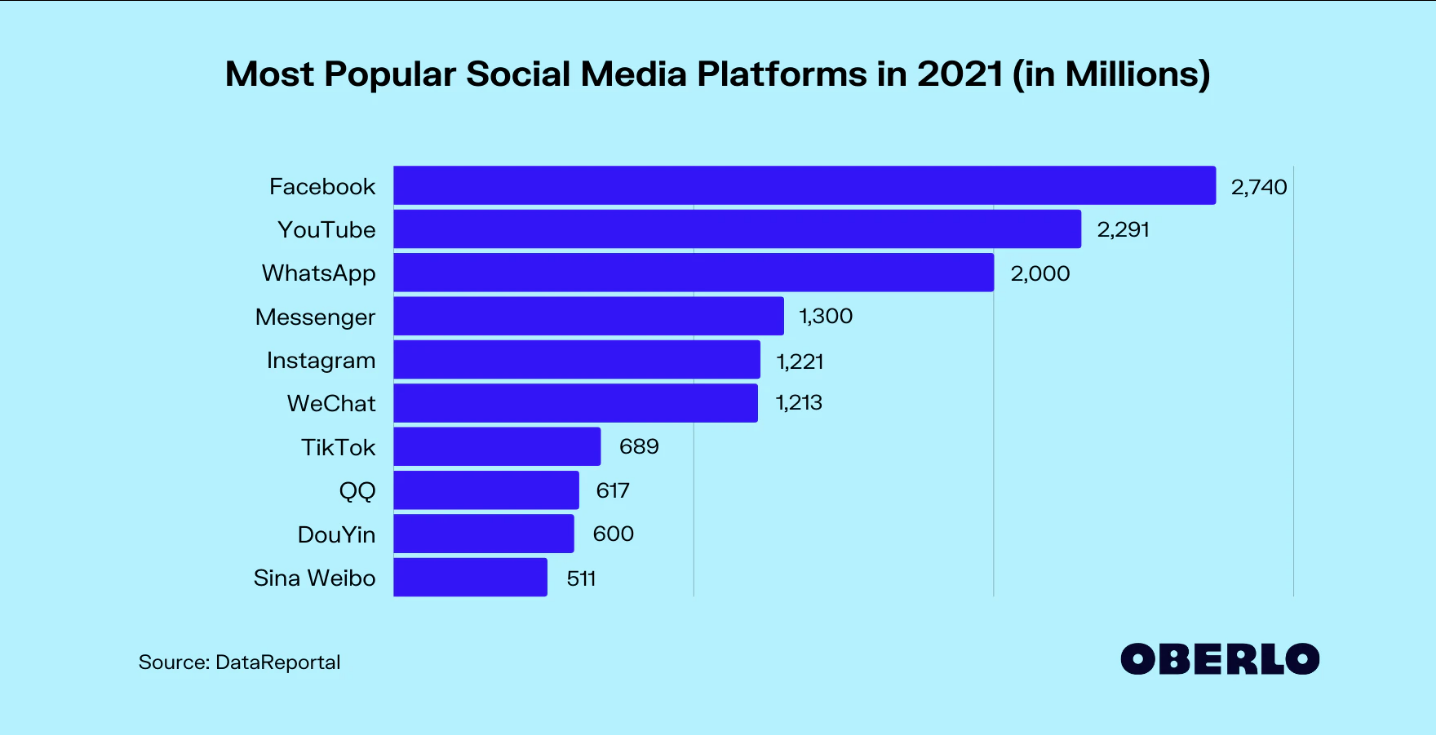
    Maybe. But probably definitely not. One explanation is that they take advantage of categorizing and grouping people. Instead of just your traditional family, coworkers, friends, neighbors, you also have your knitting circle, plant people, fitness gurus, cat ladies, and whoever else. More importantly, though, the quality of interaction takes a massive hit. They aren’t interacting deeply with all 2,000+ of their online friends. 

    Is the Us-Them Paradigm a Paradox?

    People love connecting with other people. Introverts and extroverts might go about it differently, but both do indeed enjoy human contact. And not only with friends and family: research has shown that people are happier after connecting with total strangers.

    The Us-Them paradigm places a big fat wedge in that. Something is apparently holding that wedge in place — or multiple somethings — because the natural gravity of humanity’s love for humanity would seem to imply that the natural state would be for no wedge.

    $$$

    One finger on the wedge scale is money. It has become profitable to sow discord: if you can make one group of people afraid of another, you can sell that fear. It has long been profitable to lie and to act selfishly.

    Some people and media companies have found that you can make money by selling people an alternate truth. They find success and profit by keeping the world a divided place using these false truths. They abuse the trust that other people place in them, have imbued them with the power of their belief. Then people don’t want to admit that they were duped, that they were wrong. It’s easier to go on believing the lie that white people are inherently superior than to face the fact that your ancestors, that you yourself, have contributed to — and profited off of — the profound suffering of other people in the service of a lie.

    Because the biggest finger on the wedge scale is demographic in-groups, is tribalism, is the fear of The Other, the Us-Them paradigm itself.

    Reconciliation in Truth

    So, this is the reconciliation that we face. We have to find a common truth that links us across the Us-Them paradigm, that can bring us together in it. If this sounds basically impossible to you, well, you’re not wrong.

    Part of the difficulty will stem from the fact that it won’t be a fair and equitable shift of truth. If one side says the Earth is a sphere and the other side says the Earth is flat, the point of common truth isn’t to say that the Earth is a cylinder. Just because there are two sides to the paradigm doesn’t mean that both sides are equally far from the truth. It isn’t a compromise to chop the baby in half. This may not seem fair to those who have to move farther from their chosen haunts of misbelief, but their sense of fairness does not outweigh the needs of the people.

    Because make no mistake, there are dire needs at play. These are the needs of everyone — no matter race, sex, gender, religion, whatever — to be able to access their human rights. These are the needs of everyone to be able to live on a planet that isn’t dying. 


    Further Reading/Listening:


  • Truth and Reconciliation: Thoughts on Truth

    Truth and Reconciliation: Thoughts on Truth

    Hello everyone and welcome to the new era. How about those press conferences, eh? And wow talk about going right back to old-style controversies like the last four years never happened (very cool NYT)! So I’ve been hearing some talk — and I’m pretty sure that at least some of it has been happening outside of my own head — about a post-Trump, post-January 6, post-where-ever-we-draw-the-line Truth and Reconciliation Commission, and I thought hey, I have a lot of thoughts about that.

    For background, so we’re all starting from the same page, probably the most famous T&R Commission was on the end of Apartheid in South Africa. Many other countries have had their own commissions as well. They all follow the same basic model of a realization that something wack went down that really needs to be addressed for the good of the country. The United States, for all its posturing as the beacon of light for the world, has always avoided acknowledging the truly wack things that have happened here. We have yet to do anything lasting or meaningful to address past things like slavery, pushing out indigenous peoples, or putting people in camps and cages. 

    If you’ve been here before, you know that I like musing on basic subjects: fear, isolation, motivation, fear again. (Check out the Harry Potter and the Sacred Text podcast for this but done better.) For my sanity, I’m going to break my thoughts on Truth and Reconciliation down in a similar way. The logical place to start then is with truth.

    The Trust in Truth

    To talk about truth, we have to talk about trust. There can be no agreement between parties without trust. If you don’t trust either the other party, or if you don’t trust yourself to be able to extricate yourself from the fallout of the failure of the agreement, then you won’t enter into it in the first place. This trust is best achieved through truth. 

    At its core, democracy is an agreement between people on how to govern themselves. This means that people have to be able to trust each other in order to come to an agreement — and not in the way of trusting themselves to be able to take care of themselves if the going gets bad; that is no longer a system of democracy, because the interaction is no longer interpersonal. Two of the most prevalent political ideologies battering at our democracy today are Libertarianism and Authoritarianism. These both in a way trace back to a dearth of trust: Libertarianism by losing it in others and directing it back inwards, and Authoritarianism by losing it in others and directing it instead towards a chosen authority (which is a roundabout way of directing it back inwards).

    A Slight Tangent

    Democracy is also not an agreement between the people and the government, because the government is not an entity separate from the people. Both Libertarianism and Authoritarianism could lead one to believe otherwise, however. Libertarianism, in saying that the government cannot be trusted, is both implying that (1) other people cannot be trusted and (2) the government is an Other entity that cannot be trusted. This is of course an ideological tension if you believe in a government of for and by the people, but it also allows entry for more people to have their own version of Libertarianism.

    Authoritarianism, on the other hand, says that (1) other people cannot be trusted, (2) the government is an Other entity, and (3) only their chosen authoritative government can be trusted. In a way, it’s a more stable philosophy. If you cannot trust other people, it makes sense to put your trust in an authority that can dictate the actions of the other people.

    This also highlights the easiest way to sabotage a society: to ruin its internal trust. If you are fed the idea that other people cannot be trusted, then it makes perfect sense for you to conclude that you cannot be in democratic congress with them. 

    Types of Truth

    So let’s talk about truth. The two main forms of truth available to us are truth in words and truth in action. Human society got to this point because of our awesome skills of complex communication. Other organisms may have basic language, rudimentary systems of communication and learning, but none of them have invented telephones or satellites yet, and none of them have come even close to needing those yet.

    Words — languages —  are how we have managed this. Actions may be an element of communication, but they cannot convey complex concepts. Actions are furthermore subject to the individual interpretations that happen in the brains of each person who observes them. Words have the power to be precise in a way that actions can never be.

    Communication in the Age of Technology

    The internet has created the illusion that words are cheap in a way that they never have been before. Pre-written language, words were shaped into stories that could be told through the generations. Physical forms of writing each have their own costs associated with them, from chisel to ink. They also have an inherent audience limit. Now, any fool with a connection can put out words that can be accessed by anyone else. The audience limit is orders of magnitude larger. We have created platforms that serve the explicit purpose of reaching incomprehensibly massive numbers of people essentially for free.

    Cheap words means it’s easier to use them without consequence. If you say something wrong, something false, you can easily add more words to try to make it better. There’s no reason to ever regulate your words.

    If the perception of words is that they’re cheap, then actions gain increased importance. It’s not what you say, it’s what you actually do that matters. Actions become concrete evidence, an incontrovertible truth, by which we can all judge. (Cyclically this also erodes the power of words.)

    However, this then follows that the actions of those in positions of power are correspondingly more important as well. That means that merely paying lip service to something is insufficient. One cannot both cheapen words and then expect to be able to live off of them. In that situation there is a complete absence of truth, and thus of trust. On another note, they also need to be able to take actions by which they can be judged.

    So What Is Truth?

    There is no absolute truth, because there is no absolute reality. Practically speaking, everything is based off our perception of reality, not off of reality itself (whatever that may be). That means that a shared truth is a shared trust that we’re all interpreting reality the same way. Societies are built on this shared truth.

    If someone professes a belief in another reality, either by word or by action, that is not just empty words and actions; that is an invitation into another truth. If that professed belief is a lie, then that is an attack on a common truth and trust and thereby on society itself.

    A belief in a lie can be committed without intention. Americans aren’t reinventing the lie of white supremacy every generation, and yet it has persisted for longer than the nation itself. It’s a lie that has been woven into the very fabric of this country; and yet, as with all lies, it is nonetheless tearing our society apart. The only way to fix it is to first acknowledge that it exists, that it is a lie, and that it must be addressed head on with a truth that is shared by all Americans.


    Further Reading:


  • Make Space: The Space of Fear

    Make Space: The Space of Fear

    In the interest of Being Festive, let’s talk about the space of fear! Because is there a better way to celebrate holidays than by writing essays? I think not. I wrote about fear last Halloween from the self-care angle. This year I’ll examine it from my Make Space angle. If you haven’t already, you can catch up here with Part 1: Clutter and Part 2: Listening!

    I aim to approach this from two angles. First, by asking what the space of fear looks like; and second, by looking at what it pushes out. Disclaimer here (that I usually forget to add because apparently I just can’t be bothered to spend the time remembering) that I am not am expert, I just like to read all the things and then regurgitate unsolicited thoughts back out. Enjoy!

    The Space of Fear

    Fear can be roughly separated into two types: acute and chronic. Acute is short-lived, usually a response to a situation, lasting basically as long as your body can produce adrenaline. This can range from tripping on the sidewalk (brief burst of adrenaline, very short time being afraid) to being followed at night (more sustained adrenaline, longer period of fear). Chronic is fear that persists either longer than the danger, or danger that persists longer than your body can physically respond.

    Technically speaking, what I’m describing as chronic fear is actually anxiety. There are some nuances, but basically anxiety is fear without a concrete source. As far as I’m concerned, for the purposes of this blog, “fear without a concrete source” is still fear.

    When you’re in that space of fear, it doesn’t feel great. You feel like you’re being closed in. Every decision you face is more fraught. If it’s chronic, you feel more tired, because your body is working overtime to keep you alive. Fear takes up a lot of room and it doesn’t like to share. It invades and tinges everything else with its color: its murk of tension, exhaustion, apprehension, and apathy.

    Spoons

    When the space available to you is taken up with fear, there’s less space left for other things. You have less bandwidth to deal with additional problems, even the minor ones. And you have less space to devote to anything outside yourself: fear is forcing you to spend your energy on yourself, on keeping yourself alive.

    A popular metaphor in the disability community is that of spoons. When you’re living with a chronic illness, you often have less energy or are more quickly depleted than someone who isn’t. Spoons represent your units of energy, of which you have a set number that only recharges with rest and sleep. Living with chronic fear is, in effect, living with a chronic illness.

    What We Fear

    Before we go any further, let’s build some context. As I write this, we’re in the seventh month of dealing with a historic pandemic that has so far killed over a million people worldwide, almost a quarter of those in the United States alone. This has severely strained our already threadbare social safety net. While the official unemployment rate is relatively low, this fails to count people who have dropped out of the workplace to take care of children who now aren’t in school full time, people whose industries have disappeared, or all of the people who are underemployed.

    This is all in addition to all the “usual” causes of fear that were around before the pandemic, and will remain after it. These range from existential threats such as climate change to personal fears for our own success and well-being.

    What Impacts Our Fears

    Of course our fears don’t live in isolation. They are rooted in the condition of the world we inhabit. A world that leaves individuals to fend for themselves is inherently more fearful than one that establishes a community to delegate burdens of care. A world with lots of inequality is more fearful on both ends. On the bottom end of the spectrum, there is more fear for basic necessities. On the top end, there’s the fear that comes from the prospect of losing privilege should the inequality fail to persist. Naturally, this creates additional tension between those who would like to live more comfortably and those who benefit from others having less.

    The Space That’s Left

    So what is outside the space of fear? What gets pushed out? When we’re in a space of fear, our attention is focused inwards, on getting ourselves through the fear. That means there is less room for other people — less room for caring about them. A parent who is overwhelmed with trying to pay bills and put food on the table is going to have a harder time being present for their children. Someone working multiple jobs to stay afloat is going to have much less space to think about things like politics. A student who doesn’t know where her next meal will come from is going to have a harder time focusing in class. A black man who is afraid of being summarily executed by police or an immigrant afraid of deportation is going to have a harder time moving around freely in society.

    It’s also easier to fall back onto more base instincts when faced with fear. With your reduced space, it’s harder to devote any of your remaining bandwidth to complex or nuanced thoughts. Again, it’s a game of survival. The condition of your fellow people need only apply as they directly and visibly relate back to you. You can get so used being attacked that you see potential attacks in every action around you — and react accordingly.

    A Society in the Space of Fear

    Fear is a potent emotion. It’s pretty good at keeping us alive by grabbing our attention when a threat presents itself. That same mechanism is ripe for exploitation, by its very nature. One of the easiest ways of getting people’s attention is through fear. Be it real or manufactured, fear has a natural leg up on other emotions when it comes to selling ideas.

    Fear is also a powerful controlling mechanism: if you do x, then scary y thing will happen. If you cheat on your test, then you’ll get detention. If you break the law, then you’ll go to jail. Or maybe if you just break some norm, you’ll face vigilante “justice”.

    Society doesn’t have to operate based on fear, though. Just because it is a sticky emotion, that doesn’t make it the most effective. Machiavelli might have preferred to be feared to maintain power, but a society operating in a space of fear has the same problems as an individual in a space of fear. There’s less space for growth, for creativity, for anything other than bare survival. We have other tools at our disposal. We can lessen the fears that people face.

    Mitigating the Space of Fear

    Fear is mitigated with action. Being able to do something about whatever is worrying you can dramatically cut down on how fearful you feel. We often face problems that are bigger than what we can deal with at once, on our own; or we have anxieties about things over which we have no control at all. In these cases, it’s good to try and do what we can, what we have the space and the spoons for, and then learn to set the rest aside — not forever, but until we have the space to pick it back up.

    I wrote in my last blog about making space for those who need it, if you have the space to spare. There are groups in our world who chronically face more fear than others, which chronically cuts down on the space available to them. For most of the history of the United States, various laws encoded a system in which black people were at the bottom of society, and held there by fear. While those overt laws have been replaced, the ingrained attitudes take much longer to erase. Other minorities face similar obstacles. Women have had to fear violence from men for as long as humanity has existed. Members of the LGBT communities have long been given reasons to fear living openly. The list goes on.

    Making space for others doesn’t mean speaking for them. It means giving them the space for their own expression. It means using what excess power you might have to allow someone else a break from their burden of fear. Overall, it means living in a less fearful world.


    Further Reading:


  • Make Space: Learning by Listening

    Make Space: Learning by Listening

    The most important part of making space is listening. No matter how you are trying to make space, you first have to learn to listen. You have to listen to yourself, and you have to listen to the other people in the space.

    If you haven’t already read Part 1 of my Make Space series, I highly suggest you go back and read it first. That’s where I have explained what it is I mean by “make space” and where I begin to flesh out how I conceptualize it.

    While most of us learn how to listen as young children, we often forget that it’s actually a skill we can and should practice. Usually we default to surface-level listening. We only passively hear the information that is pertinent to us in that moment, and disregard the rest. Only rarely do we venture into active listening or deep listening. With active listening, as the name suggests, you are actively paying attention to what you’re hearing: it becomes your focus. With deep listening, you bring additional attention to what it is you’re listening to, beyond how it immediately relates to and impacts you.

    Listening Inwards

    First, let’s examine the inner iterations of making space. This is when you yourself feel like you’re being crowded, be it by your physical surroundings, your own thoughts, or your emotions.

    Physical Space

    I know that listening to your physical space sounds a little strange, but bear with me. The important part of a space isn’t actually how it looks, but how it feels. No matter how aesthetically pleasing a room is, if it isn’t set up to be functional for how you need to use it, then it’s always going to feel difficult to be there.

    Sometimes this is a matter of rearranging the setup of your space. I am personally a complete dud when it comes to arranging furniture. My strategy has become multiple rounds of rearranging until the space feels welcoming and comfortable, which is how I prefer my spaces to feel. I have also found that (shockingly) using tips from design principles like feng shui is a helpful starting point. Mostly, though, I have to listen to my feelings after trial and error. Also make sure your furniture works for you: that your desk isn’t too high, that your chair isn’t too short, etc.

    Other times, it’s more of an issue of how you’re using the space. Humans associate places with the actions we typically perform there. This is why it can be hard to work from home if you haven’t before, or why sleep experts recommend only using your bed/bedroom for sleep activities. If you’re tight on space, you might have to figure out how to categorize and group activities and areas. Additionally, you could figure out a way to slightly alter the space for each activity by using different lighting, for example, or even just sitting in a slightly different spot.

    Thought Space

    Your thought space is influenced by your physical space, but not only by that. Our thoughts are also the patterns we give them. Similar to remapping physical spaces for what you want to use them for, you have to remap your thought space if you want to make any changes there. If you’re used to thinking about things from a certain angle, that is how your brain will default to thinking. If you try thinking from a different angle, things will look different.

    Let’s take a concrete metaphor of shifting perspective. If you’ve ever moved to a different neighborhood in the same city, you probably have experienced this phenomenon: nothing about the city itself has changed, but your center of reference has shifted. With this shift, locales can feel and even look different. Places that used to be convenient are no longer so, and new places have become more important. You may at some point realize that you haven’t even been down the street you used to live on in months or years — that street that used to center your lived experience. This is the equivalent change that has to happen if you want to recenter your thought space.

    Recentering and Diversifying Your Thought Space

    Unfortunately, you can’t up and move your self to a different part of your brain. But, stepping back, why might you want to go through the struggle of strengthening other neural pathways? Even if you’re happy with how you think right now, you would probably derive some benefit from experimenting with other ways of thinking. It’s part of over-specialization: anyone who exercises seriously knows the dangers of overworking one part of the body. Focus too much on your quads and not enough on your hamstrings, and you risk injury to your knees and lower back. Focus on only your abs and not on your back, and your whole body can be pulled out of balance. Think one way for too long, and you’ll forget the existence and validity of other perspectives.

    If, on the other hand, you know that there’s some thinking adjustments that you would like to make, your way forward is more clear. No easier, unfortunately, but more clear. Knowing where you want to end up helps to outline the path you’ll have to take. Just remember that goals don’t have to be set in stone: if, as you’re working on making your adjustments, you discover a new goal, you shouldn’t feel pressured to stay with your original destination. As you move and change, it’s perfectly reasonable for your goals to change too.

    What the Heck Are Other Ways of Thinking?

    Now you might be saying to yourself, hey Emory, cool metaphors, but I still have no idea what you’re talking about. That’s ok. (And thank you for calling my metaphors cool.) Thinking about thinking is kind of weird, and we don’t do that very much. Our thoughts happen how they happen, and that’s that.

    I think the most approachable method is to try thinking about things from someone else’s perspective. How do you think your friend, your coworker, your great-grandma, or your future self would think about things? How would you think about things if you lived somewhere else or were in a different personal situation? Try listening to your inner dialogue like it’s someone else speaking, and see how that changes how you feel about it.

    Emotional Space

    I struggled for a bit on how to separate out emotional space from thought space. They’re both inside your head, aren’t they? They’re both using that intangible space, so how should I separate them — or should I at all?

    Obviously, yes, I should. Your thoughts are not your emotions. Emotions are how you react to things, both internal thoughts and external events. You can think thoughts that you don’t agree with, or that you don’t believe. You can’t so much, say, feel emotions that you don’t agree with. In this way, there is an element of inherent personal truth to emotions. However, that doesn’t make them immutable. For instance, the things that made you incandescent with rage as a toddler probably now barely register on your emotional scale, because part of growing up is learning to manage your emotions, learning to manage how you react to things.

    Listening To What You Feel

    Listening to your emotions can be hard. It’s much easier to either just simply feel them, or to ignore them altogether. Listening to them means you both acknowledge what you’re feeling and why, while not being consumed by them. This takes patience. (Cool metaphor incoming!) It’s like learning bird calls. You can’t go outside and listen to the cacophony and miraculously know which sound belongs to which bird; you have to isolate the calls and learn how they attach to their owners. And just as a bird attracting a mate sounds different from one sounding the alarm, emotions will also feel different in different contexts. Feeling sad with friends is much different than feeling sad alone.

    Note here that I’m neither advocating for not feeling your emotions at all, nor giving into them wholesale. Of those two extremes, our society tends to lionize the former and ridicule the latter. This has obvious sexist underpinnings (hysterical women!), but it also has elements of Colonial-style racism (which to be fair is generally paternalistic and therefore an offshoot of sexism).

    Having emotions is part of being alive. Listening to them can enrich your life.

    When Emotions Take Too Much Space

    Emotions can be extremely weighty, though. Part of listening to your emotions is knowing when to stop: when you need to take a break from feeling all the things, when you need to take an emotional load off, when you need to take a step back from whatever is causing the emotions. For the most part, this is in the context of negative emotions, because (unfortunately) very few of us struggle with an excess of positive emotions.

    If you’re in a constant struggle to survive, it’s really hard to set your stresses – your emotions – aside. They’re always there, all around, constantly rearing their heads when you least expect it. Learning how to listen when faced with this kind of situation is daunting: you aren’t listening to the lone sparrow chirping, you’re living in an aviary full of angry corvids. (Am I writing this while being yelled at by a bluejay? Why yes, yes I am. Both physically and cool metaphorically.) You have to learn how to make your own little space of calm, where you can just breathe, for your own health and sanity. Then, once you’re in a secure place, you can take those emotions out an deal with them.

    Listening Outwards

    Making space isn’t just about you, though. There are billions of people and only one planet — there has to be room for everyone here. And not just physical room, but also space of acceptance and comfort.

    Many, if not most, societies are constructed on an exclusionary basis. You have to be the right kind of person to gain entry to the upper echelons, and if you aren’t, you receive fewer advantages. Even as we have developed incredible technologies that have the potential to feed, shelter, and clothe the whole world, we are still caught in a collective state of fear that we will suffer deprivations. Unfortunately, that fear isn’t unfounded: huge swathes of the world still struggle to survive, let alone thrive.

    Emotions About Space

    Objectively speaking, if someone has something that you too have — a phone, a sandwich, a friend —, your possession of that is not affected. If your coworker has the exact same model of phone as you do, that in no way impacts your phone or your ownership thereof. If you feel threatened by someone having what you have, it is because you perceive some advantage has been lost. Having better possessions, better opportunities, means that you have a leg up in the struggle for survival. You’re on a higher rung of the ladder. If someone else is on your same rung, you now have to fight them off too, right?

    Except. What is that ladder? Why are we climbing it? What’s at the top? And why, even in a place where there is more than enough to go around, do we so often act like the only way we can survive is by taking food from the mouths of others? Why do we act like the only way to climb that ladder is by knocking someone else off?

    How Wide is Your Ladder?

    I don’t know what’s at the top of the ladder. (I don’t believe there is a top. As far as I can tell, it’s just an obstacle course invented by those who have more to occupy those who have less. /RANT) By calling it a ladder, people naturally assume that it is narrow, with only room for one person abreast, as actual ladders are. Therefore it would be reasonable to assume that, should you wish to progress, someone on a higher rung than you would be in your way.

    This is only true if what you want is scarce, available only to a few. If you want to be head of a company, there is only the one spot. You gaining that position necessarily means that whoever is there now would have to move. However, this is not true if what you want is abundant. In that case, there is enough room on the ladder for others to be there without affecting you. This is doubly not true if it’s something immaterial.

    Of course this idea brings up plenty of objections. Physical limitations do exist. What if there isn’t enough for everyone? What if what you want becomes more scarce? Valid objections. We have to then ask, why is it that people want whatever it is? Is it something fashionable, that they can point to to highlight how high they have climbed the ladder? Or is it something necessary to their survival?

    Thought Space and Listening

    As many other people have said before me, in more detail and with more elegance, the internet is both a blessing and a curse for communication. It’s true that we can now physically communicate with infinitely more ease, but we can also tailor with equal ease exactly with whom we communicate — or don’t. We can build bubbles for ourselves in which conversations are functionally the same as talking to ourselves, if we want.

    Listening to Others

    Communicating with other people is at once the most basic element of being a social being and also one of the most complicated. We can never truly know what is in another person’s mind. Every additional difference between you and your interlocutor creates another opportunity for miscommunication. Gender, race, age, social class, physical location, life experiences, and more introduce more chances that attempts at communicating will go awry. Moreover, each of these elements reduce the chance that you’ll be communicating at all.

    But while we can only truly know ourselves based on what we have experienced, we can learn about other lived experiences by listening to the people experiencing them. And in learning about their lives, we can better communicate with them. We might then also learn more of what we don’t know, turning the unknown unknowns into known unknowns.

    Think of language versus dialect. If someone is speaking a language that you don’t know, you can’t understand what they’re saying. Moreover, you know that you don’t understand them. However, if someone is speaking a different dialect of your same language, you might think you know what they’re saying, because you understand the words they are using. But dialects are built on different connotations, different syntaxes, different lived experiences. You don’t know that you’re talking past each other, because you don’t know you’re using different dialects.

    Who is talking?

    There is more to communicating than the simple words. There’s tone and body language, which we know are lost in written and virtual communications. Sarcasm, for instance, is infamously hard to convey not just in writing, but also across dialects.

    Yet another element to consider when communicating with others is to listen to who is doing the talking. Are all parties sharing equally in the speaking time, or is one party dominating? If the latter, why? What is the context?

    Make Space For Listening

    It is unfortunately true that not everyone has an equal seat at the table. Further, those who have the most power believe it to be in their interest to maintain — and if possible, grow — that power. The more voice you have, the more you can advance your own interests. The more you can advance your own interest, the easier it is for you to live. The easier it is for you to live, the more space you have to breathe. The more space you have to breathe, the more you can use your voice.

    The more you use your voice, the less you can listen.

    One of the popular terms right now for people who have, shall we say, less room at the table, is marginalized. Marginalized people. People who have been pushed to the margins, who live on the margins, who have been marginalized. What’s fun about that phrase is that we pretend that “marginalized” is just something that happens, just a normal state of being, and not something that we cause. No Mom, I don’t know how the lamp got broken, it just fell off the table! No I don’t know how these people got pushed to the edge of society, it just happened!

    We know why people are marginalized. It’s not a secret. They don’t fit the exact mold that those with the most power — the loudest voices — have decreed is The Right Mold. Remarkably, the Right Mold looks exactly like the people with the power.

    Widening The Margins

    One cool fact about marginalized people is that they’re human beings. They have thoughts and opinions just like non-marginalized people, just like all human beings. The difference is they don’t have the same platform as the non-marginalized, and certainly not the same institutionalized megaphone as those who hold the reins of power. They’re just cramped into the edges of society, where it’s easier for those in the center to ignore them. Therefore, if we widen the margins, we bring them closer to the center, make them harder to ignore.

    We widen the margins by empowering those living on them. We empower them by listening to them. And in order to listen to them, they need the voice to be able to be heard, and the space to be understood. Not for someone to speak for them; while this brings them attention, which is a potential for a platform, it doesn’t actually give them power.

    There is enough room for everyone if we make the space. There is enough room for everyone’s voices if we learn to listen. We are all equal in our shared humanity, and everything else is just window dressing.

    And remember, friends, in a democracy, the ultimate expression of your voice – your power – is your vote. Make those in power listen to you. GO VOTE.


    I’m going to call this post here. I know I have glossed over and skipped bits, but this isn’t a novel after all. Take care of yourself so that you can take care of others. Learn to listen to yourself so you know how to listen to others. Be a good person.

    Want more thoughts? Keep reading here:

  • Make Space: Clutter, Attention, and Your Place in Society

    Make Space: Clutter, Attention, and Your Place in Society

    Where can you make space in your life today?

    So… it’s been a rough go of it lately. And it doesn’t look like things are going to get much better any time soon. In addition to the stress, anxiety, and depression contributing to my writers block, it also seems like every time I put together my outline for this post, some other major event happens that I feel the need to address as well. [For reference, the first (now wholly discarded) draft was pre-George Floyd.] History seems to be roaring past us right now.

    On the other hand, what has actually changed? All of the problems we have today have their echoes and equivalents in the past. And really, the people walking the Earth today are essentially the same as those who were walking around 5,000 years ago. There’s just more of us now, with fancier toys.

    Dedicated Readers of this blog may recall that I read and reviewed a book last year titled Make Space, and that I was not particularly thrilled by it. That is, the content was fine, but the execution was… lacking. In spite of that, the basic theory it presented has kept simmering in the back of my mind, intruding in on other topics. What better time to consider physical space than when faced with social distancing orders? To consider emotional space than when faced with racial justice protests breaking out around the country and around the world, or to consider mental space than when we’re all faced with news overload from this year? The original book was only about minimalism in interior design and self-help, but the principle of making space has much broader implications. My attempt here is to write what I wish that book had actually been.

    The Background of Making Space

    In order to make space, we first need to take stock of what is currently taking up that space. This means taking a good hard look at your surroundings — and you know I don’t just mean physical. What does your mental framework look like? How are your emotional underpinnings structured? Where is your attention centered?

    The design goal of Make Space is minimalism. Minimalism in design pares elements down to the understated essentials, which brings increased attention to the few things present. Minimalism in music is made by repetition and very gradual change, which focuses attention on the musical minutiae used. Similarly, minimalism in visual art often uses repetition in its geometric, structural shapes. The underlying idea is to set a homogeneous base from which subtle changes are magnified, and large deviations from the pattern have exponentially more impact.

    The book suggests getting rid of clutter and excess, whereby you can discover what is truly essential to you. It’s a version of Marie Kondo’s sparking joy. How much space can you clear? Once you have cleared the space, you have the room to truly enjoy life… or so the theory goes.

    Why Make Space?

    The physical space we occupy informs a lot of our mental space. The most obvious example of this is clutter. Some people work very well in a cluttered office, but I would hazard a guess that the majority of people are negatively impacted by that kind of environment, whether they realize it or not. If you live or work in a cluttered space and often feel overwhelmed or anxious, the clutter might be a contributing factor.

    However, there are other affective physical elements to consider, such as those that tend to impact only certain groups. For example, let’s take stairs. They might not be a notable feature for someone like me, but for someone who can’t walk very well or at all, they represent a big physical challenge. This physical challenge in turn becomes a mental strain. For every place they go, they have to consider the navigability of that place. While each individual instance of encountering stairs may not be a huge deal, in the aggregate it becomes a much larger mental load.

    The Power of the Individual

    Many of these discriminatory environments exist at a societal level. This means it is far outside the ability of any one person to control them, to make them less discriminatory. It’s human nature to just accept the things that are too big to control — especially if they aren’t impacting you personally. As a white woman, I have generally no reason to be afraid during encounters with police. But I also know this isn’t the case for everyone. There isn’t much that I personally can do about that societal fact.

    The power that I do have personally is to use the space that I have to open more space for others. It’s like if you’re walking down a narrow sidewalk, and someone pushing a stroller approaches from the other direction. It’s easier and safer for you to do what you can to give them room to pass, than to expect them to do so for you. Sure, it might be an inconvenience for you to briefly press against a building or step out onto the curb. But maneuvering a stroller like that is plainly more difficult. Additionally, that person pushing the stroller is already working harder to 1) maneuver around other obstacles, like curbs without cuts, and 2) just push the stroller in the first place. You have the power to give them space and lighten their load because you aren’t pushing a stroller yourself.

    Attention

    In How to Do Nothing, Jenny Odell touches on this concept through her lens of attention. She calls them the margins. It’s hard to miss the stroller approaching you on a narrow sidewalk: that’s an obvious obstruction. You can clearly see your opportunity there to make space. But there are also plenty of less obvious margins.

    There is a significant portion of people for whom the project of day-to-day survival leaves no attention for anything else; that’s part of the vicious cycle too. This is why it’s even more important for anyone who does have a margin — even the tiniest one — to put it to use in opening up margins further down the line. Tiny spaces can open up small spaces, small spaces can open bigger spaces. If you can afford to pay a different kind of attention, you should.

    Jenny Odell, How to Do Nothing

    If the first step of making space is noticing where you need it in your life, the second step is paying attention to where you can make space for others. In this plane crash, you have to put on your own oxygen mask first, and only then can you help others with their masks.

    Just paying attention can itself make space. Having more people carry the burden doesn’t make the burden itself any lighter, but the weight is spread out so each person is carrying less. Being able to not pay attention to a problem is a privilege — and therefore an opportunity to make space for others.

    To Be Continued…

    Rather than trying to wrestle everything into one exceedingly long post, I’m going to split this up. Part 2 is all about making space by listening, in all its different forms.

    Further Reading / References


  • Theme of the Week: The Village

    Theme of the Week: The Village

    No, not the M. Night Shyamalan movie. Or the People. I’m thinking about the concept of a village. It’s the one that people mean when they use the phrase, “It takes a village to raise a child.” I touched on a facet of this concept a while back in my post on isolation, but I still have some thoughts left.

    The Traditional Village

    Thatch roof cottage in a traditional village
    THATCH ROOFED COTTAGES

    Let’s start by looking at the traditional, stereotypical village. This is a settlement of around a few hundred people, or as Wikipedia says, 5 to 30 families. These clusters of families usually formed for mutual defense and aid, and because most humans like being near other humans (bonus points if they’re not related). In pre-industrial times, people did a bit of everything: rugged menfolk worked fields and cared for animals, rugged womenfolk cared for animals and made clothes and meals, rugged childrenfolk did whatever was asked of them (and were always seen and never heard).

    Your social circle was made up of whoever lived near you, and you probably knew all of them. If you strayed from what was expected of you or broke a social norm, there were social consequences. On the other hand, you could probably rely on the other villagers to lend a hand if you were struggling. So while villages worked for the greater good society as a whole, they weren’t always great for individuals.

    The Modern Take

    Growth of a village

    Now let’s fast forward to the modern era. We updated our communication strategies and discovered other people, then we invented industry and sent all the poor rugged childrenfolk through ringers. Next, we got scared of all the “other” people, killed each other a lot, invented weapons that could kill the planet, and now it’s today.

    Modern sociability is no longer dictated by physical proximity alone. Now, you have options. Your classmates are not the same people as your coworkers, and neither of those are the people you see in the grocery store. Which ones do you interact with, and which do you choose to make meaningful connections with? Most people have very few interactions with their neighbors, so they’re not relying on that to make friends.

    The digital age makes it easy to connect with virtually anyone, anywhere in the world. This means that you don’t have to be friends with Karen from HR if you don’t want to. It means you’re free to ignore the people living around you. You can be friends with only the best people, and if someone bothers you? There’s seven billion more to choose from.

    Your Village

    Alpine village

    The cool part about that is that you get to build your own village. You can fill it with all the people who love and support you, the ones who share your ideals and values, and who like the things that you like. Making these connections is fun. It’s really easy to be social with people who are like you! What’s more, it’s healthier when you have people you can talk to.

    Of course this self-sorting has downsides too. If you’re able to choose with whom you interact, most people naturally choose more similar people. It’s the path of least resistance. But, that leads to fun things like increased confirmation bias and groupthink. If your village is based on a certain trait, then that becomes a integral part of your identity. This is what gives rise to the legions of rabid, toxic fandoms: their friends are all X fans, so to stay friends they have to be just as committed to X, or risk being thrown out of the group. So, really, it’s just like a traditional village, only with more memes.

    The Answer

    A model village
    A Model Village
    https://www.gardenvisit.com/gardens/babbacombe_model_village

    Allow me to, in my excessive wisdom, propose an answer. But first, so the answer makes sense, let’s ask the question: why on earth am I talking about any of this?

    Humans are social creatures. Yet, in the modern world, lots of social interactions are discouraged: don’t talk to strangers, don’t talk to people on the subway, don’t talk to people in the gym, don’t even look at homeless people. You never know when one of these people might turn out to be a crazy person. It’s safest to keep yourself to yourself. We crave the comfort of the familiar, and create our own fortresses from it.

    So I might be talking about this because there is a lot of “othering” happening in the world. My side is right, and your side is wrong, but maybe we should all come together and sing songs in a circle. Maybe I’m talking about this because I’m really hungry and villages always make me think of awesome local bakeries. I’m probably talking about it because I want to reiterate once again that we need other people, and therefore it is in our best interest as a society to make sure that other people are taken care of, even those outsiders who aren’t fans of X.

    Really though, I just want to giggle at model villages again.


    Want more of my thoughts? (Bless your soul if you do.) Latest posts: