Before we start: hey there, Thought Readers. It’s been a while. How’s it hanging? World seems great right now. Rest assured, though, that I have not abandoned you. I did move to a new city and start a new job and have to get a new computer (RIP my dear 2009 MBPro, you were a champ) and for some reason those things had a bit of an impact on my creative process. No idea why that would be. Anyway.
I’m planning on being back this year, exposing my Thoughts to the oxidizing light of screens. I have plenty of them hanging out in various states in my drafts, but finishing and polishing them up has been just too much of a bother for my poor delicate constitution. (If you want some behind the scenes reasons why, I will sum up by simply saying GIANT INTERNET CONGLOMERATIONS BAD and you are free to conclude from that what you will. Related note: you might want to subscribe to the email version if you aren’t already to keep seeing these. If you want to keep seeing these.)
I have also realized that one of my big sticking point for posting my thoughts is that I struggle with conclusions. Not wrapping the post up, I mean my brain is telling me that I need to find a way to conclude, as in, idk, a solution?? So here is the first New Year’s Resolution that I have made in maybe my entire life: I resolve to not feel like I have to first find The Solution to the problems that I start mulling over in order to post about them. There usually aren’t solutions, and that is the whole point, you know? So if my post seem messier and more open-ended going forward, well, welcome to an even closer facsimile of my brain I guess. I’ll probably also leave in more of my tangents that I used to edit out, so buckle up. Now on to the main event.
Humans love stories. Story is how we have made sense of life, since the dawn of humanity. The random chaos of an indifferent universe is too much for us to deal with, so we create stories to explain, to give meaning to our lived experiences. Stories also help us make sense of our internal lives. Our emotions are a different chaos than that of an indifferent universe, but they can be similarly overwhelming.
So what are the elements of story? A-number-one is character. Plot comes in at a distant second place, and trailing somewhere in the foggy middle distance of third place is setting. (Story nerds might yell at this point that I’m missing some major elements. Unfortunately, story nerds would be wrong, because those missing elements go under those three categories, COME AT ME NERDS. Conflict is character. Resolution is plot. Theme is literally just [just] the story, what are we doing here? You might want to think about those conceptually to write a story but that’s not what we’re talking about now. Nerds.) But wait, I hear you (non-nerds) say, isn’t story all about plot? Isn’t story The Things That Are Happening? No. If that was the case, history classes would be hot-ticket seats instead of nap time.
But if humans use story to explain the chaos of the universe, then isn’t that almost necessarily plot-driven? Isn’t that explaining The Things That Are Happening? The sun rises because a god drives his chariot across the sky, or because an eagle opens its wings. The world was birthed by the earth mother, or created from primordial mud brought up to the surface by a giant turtle. Look at all those plots. No. Wait. Reread those examples. Those are about the characters. The important part is Helios, is Atabey, is Kisosen: the important part is the character. Story comes in as the how the characters react to circumstances; the circumstances are not the important part. Story is the because.
In story, generally, ideally, there is a narrative structure, which ends with the main character or characters having changed in some way, or having learned some critical lesson. The key here is that there is an ending, a conclusion, some decisive denouement. The characters have found the missing piece to their lives, the conflict has been resolved, everyone can ride happily into the sunset together, or maybe everyone died horribly. The End.
Of course, this is not how real life works (spoiler alert). Real life just keeps going, unfettered by narrative structure. Which is… exhausting, if you think about it. We set goals for ourselves to counteract this: graduate, get a job, get married, have kids, retire, raise llamas, die. Start a band, go viral, learn a language, write a novel, start your own business, remodel your house. What’s even easier is setting goals for ourselves that other people have come up with: the expected goals. That has the added advantage of not requiring us to put thought into what we want. Just let someone else take care of the thinking. Let society mete out expectations. If enough people have gone along with them for long enough, they have to be the best options, right? If enough stories and books have described an arc from beginning to decisive end, that has to be achievable, right? And that means there is a goal to achieve. An endpoint. (But an endpoint other than death, please, we don’t want to think about that.)
You know what also doesn’t follow a narrative structure? Democracy. And it really, really seems like it should. There are characters. There are battles. There are victories and losses, and there is progression. There are different settings and high stakes. There are all the elements you would expect to have in a story — and yet. Democracies are made up of people, real people, in the real world, which means that they are just as messy and just as arbitrary as real people in the real world.
Democracies demand continual care and attention. You can win a monumental victory, but that is never the end. You can never rest on your laurels. Just like your own individual life, it just keeps going, one battle to the next. Today it’s unexpected car trouble, tomorrow it’s fringe candidates trying to take over the local school board. The only constant is that it is constant. And, again, that is exhausting. More than that, it is messy. Everyone is different and has different opinions, but everyone gets a say, so there will always have to be compromises and debates. No one person gets to be the ultimate arbiter of all.
So maybe all the current democratic backsliding into fascism and authoritarianism makes sense. Why keep fighting election after election when, instead, you can pick the team that can win once and then be set for good? Why not pick the team that sells such a beatiful narrative — not one of constant compromises and fights, but one of Right and Wrong and Victory? Why have to constantly concern yourself with the nitty gritty ins and outs of current events, which you never have the time or energy for, when you can instead appoint someone who will simply take care of it all for you? We are already electing representatives, why not simply take that a step further?
Now, just to be clear, I do think that democracy is a good thing. But I also think that story is essential to the human psyche, and I’m not sure how to square those two things. Can we find a different way to tell the story (so to say) of democracy? Is there a way that democracy is fundamentally at odds with how humans work, or is it more that currently our current system as a whole — society, politics, economy, everything — is what is at odds with humanity?
So there’s a concept espoused by Mark Zuckerborg that I keep coming back to lately. To loosely explain it, he believes that everyone needs a Facebook profile (shocker) and that one, singular profile of you should be sufficient for absolutely everything in your life because having multiple profiles would mean that you’d be somehow lying about who you really are and that means you lack integrity and like why on earth would you want to say something to your bestie that you wouldn’t say to your boss? Obviously, we know that the Zuck only exists to Win Capitalism™ and his chosen medium to achieve that is ~social media~ so it makes sense that he would want everyone to be his chattel consumer base, so I am perfectly happy disregarding everything he says.
However. Is he right? Is it possible that, by sectioning off parts of your life (facets of your personality?) that you aren’t being true to yourself? Could it be the case that when you behave differently around your children compared to when you’re at work you lack integrity? And that’s to say nothing of possibly being a different person at age 15 versus age 50, the horror.
The Questions
I think all of this comes down to the questions: Who are you, and how do you know? Are you your occupation, your role in society, your preferred hobbies? Are you your gender, sexual, racial identities? Are you the culture you grew up in, or the one of your ancestors? Are you your MBTI, Big Five, Enneagram, astrological sign, Hogwarts House? Are you a cat person or a dog person? Are you the things that you have learned, or the things that you have done? Are you the things that you dream about?
Oh, and one more question: does it matter? Is it important to be able to put a precise label on who you are?
Personality As Labels
All of the factors that might go into your personality serve to help define where you fit in society. They can help you find other people like you, who therefore may understand you better and make you feel accepted and seen. They can be an easy shorthand for defining what makes you you — because no one has the time for lengthy explanations.
It also matters to companies who want to sell you things. If they can convince you that their product is for your type of person, they’re more likely to sell you on it. Having pre-defined labels and categories makes their marketing so much easier.
What Are Labels?
We can know that this is about making defining people easier by looking at labels that aren’t strictly one thing or another. Bisexuals face erasure and skepticism from both straights and gays. Afro-Latinos often struggle to find a place in either black or Hispanic spaces. Some people like both cats and dogs. Having identities that aren’t simple cut and dry is definitely not de rigueur.
Additionally, we know that everyone will have at least one identity that changes over time: what age you are. You won’t stay young forever, but there is an absolutely massive market dedicated to helping you stay within that identity for as long as possible. Alternately, the concept of childhood has shifted and broadened and sub-categorized in the last century or so, creating new potentially marketable identities.
Another identity that most people will experience a shift in is ability level. Every one of us is to some extent differently abled in some fixed sense: some are short, some left handed, some neurodivergent, and so on ad infinitum. Shifting ability level can also be simply as you learn how to do things better, from literacy to playing an instrument to reading your cat’s emotions; it can also be shifting health, such as loss of mobility as you age, weakening eyesight, or as a result of disease or illness or accident.
Personality vs. Identity
But identity isn’t personality, which is what we were originally talking about, right? Well, maybe. Identity is the outward label we give to things that we are, while personality is built of how we are; how we behave and think and engage with the world around us. By necessity, this outward expression of our inner personalities will change based on the external situation. That isn’t a lack of integrity. That’s rational.
So was the Zuck talking about identity or personality? What is your social media profile: a reflection of your self, your personality; or is it a collection of your identities that add up to the external expression of your self? Which is easier to commodify? And then which, if either, do we mean when we tell someone to “be yourself?”
And of course, if you liked this, you might also like some of my other musings on topics, like truth and reconciliation or making space. Or if you didn’t like this, sorry?
Last week I started in on the topic of Truth and Reconciliation by examining the truth. Now it’s time for more thoughts on reconciliation than you ever cared to read! In order to reach reconciliation, we must first have a common truth, a common history. After all, what is history but the story we tell to explain our present? The dead don’t care what we say.
But first, the matter at hand: what does it mean to reconcile? Can we?
Right now we have a common conception that there are two halves of society, inextricably interconnected, diametrically opposed. This is, of course, a gross oversimplification, because humans naturally struggle with complexity (more on this later). However, we do indeed have one part of our society that is determinedly sprinting towards an idealized past and hell bent on taking the rest of Us with Them.
Why Reconciliation?
There is a branch of religiosity — in the US it appears as right-wing Evangelicalism — that is profoundly authoritarian. This is the religion that takes the view that letting people think for themselves is dangerous, that the only way to keep people in the faith is to keep them afraid and unable to form their own interpretations of the religion or of the world. This by definition requires a rigid and narrow interpretation of the Bible (for example) provided by People Who Know More Than You — i.e., the authoritative authorities. The people involved in these branches of religion are then naturally more susceptible to authoritarianism when it crops up in other circumstances.
The Foundations
As I vaguely alluded to earlier, we have facing us an Us-Them paradigm. It is built on several factors. One of them is what I’ll call the Traditional American Psyche. This is partly derived from the Puritan roots of the country, which has contributed to the Evangelicalism as described above, but it is also based on ideals of Individualism and Freedom.
The story we like to tell ourselves of the founding of the United States is one of brave people fleeing persecution and founding a beautiful free society in which people could live as they chose. Setting aside for the moment the many, many flaws in that history, let’s first ask the obvious question: Why is it such a seductive idea to be solely reliant on yourself?
This ideal of individualism is deeply woven into the fabric of this country. It exists not only on the personal level, like that iconically described by Thoreau, but also at the societal level. Today we are a big strong superpower that don’t need no man sorry appreciates the generous assistance of our less powerful allies, but even before we leveled up, the country had a similar-outlook-but-different-effect execution of isolationism. Same self-reliance, fewer overthrown foreign governments.
Individualism
One angle from which to examine this individualism is from the parochial lens, as featured in Evangelicalism. In the fly parlance of the youths, we might also call this parochialism ~toxic masculinity~. It’s where you’re the big strong country who can and does take care of everyone else, because everyone else is too weak to do it for themselves. One might even say it’s the Manifest Destiny of caring. Obviously this is because relying on someone or something else is a sign that you can’t take care of yourself, that you’re weak (implication: like a woman), that you need some sort of parental figure (implication: like a child), that you’re just not manly enough.
And just in case you might be confused, this isn’t like a loving kind of caring, because that’s also emasculating. This is the condescending pat-on-the-head kind of caring. Because, of course, everyone loves to be condescended to, so it makes for an excellent way to conduct social interactions!
Is This My Blog If I Don’t Talk About Fear?
Another angle is, of course, fear. This isn’t wholly separate from the first angle. Really it’s more of a distillation of it: why do people struggle so hard to be tough and manly? Is it because that’s the most fun way to live, or is it a fear of the perceived alternatives? Do people want to run away from things because that’s the logical thing to do, or is it easier than facing the fears that come with them? If you only have to worry about yourself and yourself alone, then whatever happens is under your control, and you don’t have to worry about what might happen outside of your control.
However, this rugged individualism ignores the profoundly social structure of the human organism. Humans are at our best when we work together and delegate responsibilities — without condescension! — especially in such a complex society as we have today.
Freedom
As far as freedom goes, well. Ignoring the facts when the country was founded, women were considered property and there were, you know, actual slaves, even the white man had some limits to his freedom. Laws curtail some actions. Responsibilities also curtail individual freedoms in a way, in limits imposed by family, work, friends, neighbors. The friction here crops up often in the perceived difference between personal responsibilities and imposed responsibilities. In other words, people don’t like being told what to do; they prefer to be able to do it of their own volition.
However. Democracy is not the same as everyone deciding for themselves: that’s anarchy. Democracy is everyone having an equal say in what the decision is.
But wouldn’t it be great if none of those responsibilities existed and we could all run about naked in the woods owing nothing to each other??
Bad faith arguments say that once you start imposing limits on freedom, then there is no stopping point. Once you limit one thing, what’s to stop you from limiting everything? This is the “paradox” of tolerance: you can tolerate everything except intolerance. One quick litmus test though: are your actions harming someone else? If yes, then you are curtailing their freedom to live their lives. If your pursuit of boundless freedom leaves other people with less freedom, then that’s the limit point.
The Powers That Be
This brings us to the people in power. To help simplify life, we elect people to represent our interests in government (or we allow the formulation of organizations tasked with our care and protection). Crucially, these representatives are not outside of the normal structure; rather, they are profoundly a part of it. The representation of your interests does not become some oThEr once it is invested in a person — it’s still your interests, still part and parcel of your live in your society. This means that they — your representatives — are emphatically not outside of the law that governs your actions (and their actions in their non-representative form), and in fact by virtue of the powers invested in them, they are held to even a higher standard.
Think of a concentrate of the powers and limitations of each of the people that they represent coalescing in them. In a way they become an avatar for the people they represent. This is constraining, and rightfully so. They are become the focal point of people’s belief, which is a powerful force.
Most of us have at some time in our lives experienced the feeling of power that comes from having other people believe in us. This is to an extent a hardwired social cue: the more people agree that something is a good idea, the safer it probably is to pursue. Thus, many people believing in us imparts more power than a single person.
I Want To Believe
Additionally, we have wired social cues to believe in people who have gained power. If they have successfully attained power, there’s probably a reason for that, right? That means that we have to be able to hold the circular idea that power imparts belief imparts power, and the implications of that for leaders of society.
One of the implications that I want to highlight is the leaders’ beliefs about the beliefs of the people they represent. Naturally, leaders representing a multitude of people will have to reconcile a multitude of opinions and beliefs if they are to effectively represent everyone. However, our system is currently set up in such a way that if a leader fails to uphold that ideal of fair representation of their constituents, there is no quick or easy vote of no confidence; there is basically only the actual elections. Anything within a term limit is left to the trust in the norm that people will vote in their interests the next time. This however does rely on things like the people being actually able to vote.
This is a rest stop on our journey of reconciliation.
The Truths We Avoid
Let’s now circle back to the flaws that we set aside in our glowing portrait of the founding of this country. In the beautiful US of A, any deviation from “the norm” that you may have becomes your primary identity. And, excitingly, this is a really fun way that people outside of “the norm” have been targeted for persecution.
But wait! You may shout. Didn’t I say that the founders were “brave people fleeing persecution? Why yes, yes I did. Strange, that. Who could have guessed that the society of The Scarlet Letter could be intolerant?
One feature that we often take for granted is how predictive our identities — our degrees towards or away from “the norm” — are of our political views. Why should this be the case? If each person were truly free to decide for themselves what kind of society they wish to participate in, it would make sense that demographic distributions within ideologies would be fairly equitable. However, as we all know, this is manifestly not at all the case. Therefore we face the proposal that certain political ideologies must be an anathema to certain demographics and identities.
Personal Reconciliation
The majority of people would say that they’re good people. People don’t generally believe, or like to think, that they’re otherwise.
We also don’t like to be told that we’re wrong about things. We like even less actually being wrong. Then, internalizing that you’re wrong about something takes time and space to acknowledge and more to address it. All too often, we are not afforded this space of development.
Instead, people become so afraid of being wrong (and of not getting that space to reevaluate) that they retrench into their established misbeliefs. This feels to them safer than trying to change — because change is scary — and most likely, everyone around them also has the same misbelief. As social creatures, going against the grain is extremely difficult.
Language As An Out?
Another issue crops up here wherein our language doesn’t often differentiate between terms that are systemic versus those that are personal. Most notably here are the terms “sexist” and “racist”. A singe person can be racist, and the society in which they participate can also be racist. A singe person can not be personally sexist, while still participating in a sexist society.
A person who believes that they are a good person will not see themselves as sexist or racist — those (at least for most of us) don’t fit in with the ideal of a good person. Participating in a system that is sexist or racist also does not make one a good person, so acknowledging that is similarly painful and frankly better off avoided.
Additionally, big systemic problems are much harder to conceptualize than personal problems are. For one, they lie outside of the direct control of any one person. You can’t just go flip the racism switch and turn it off for the whole of society. Two, they typically span much more than we can hold in our minds at one time. They start to close in on the chaos beyond our comfort, beyond the order that we have imposed on our lives.
The Size Problem
That chaos is the big and scary realms of monsters and madness. The whole story of our lives is finding ways to impose order on that madness: we categorize, we organize, we create neat narratives to explain events and to explain what happens after we shrug off this mortal coil. As the world has gotten bigger and more connected, we have had to create additional ways and means to undergird our sanity.
The average person can keep track of a social circle of about 150 people. [Expand on this?] However, many people in online social media circles have exponentially more contacts than that. How can they possibly keep track of all those people? Do they have a superhuman ability?
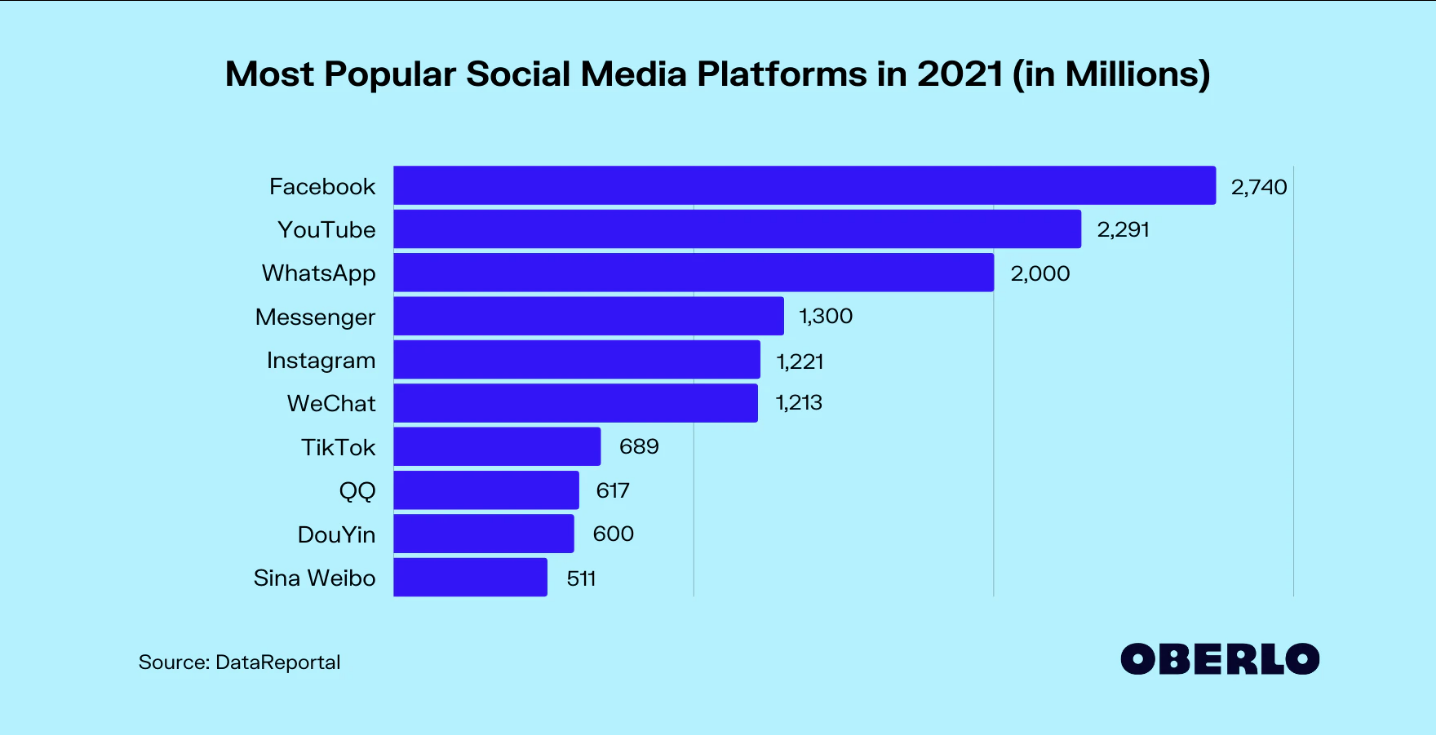
Maybe. But probably definitely not. One explanation is that they take advantage of categorizing and grouping people. Instead of just your traditional family, coworkers, friends, neighbors, you also have your knitting circle, plant people, fitness gurus, cat ladies, and whoever else. More importantly, though, the quality of interaction takes a massive hit. They aren’t interacting deeply with all 2,000+ of their online friends.
Is the Us-Them Paradigm a Paradox?
People love connecting with other people. Introverts and extroverts might go about it differently, but both do indeed enjoy human contact. And not only with friends and family: research has shown that people are happier after connecting with total strangers.
The Us-Them paradigm places a big fat wedge in that. Something is apparently holding that wedge in place — or multiple somethings — because the natural gravity of humanity’s love for humanity would seem to imply that the natural state would be for no wedge.
$$$
One finger on the wedge scale is money. It has become profitable to sow discord: if you can make one group of people afraid of another, you can sell that fear. It has long been profitable to lie and to act selfishly.
Some people and media companies have found that you can make money by selling people an alternate truth. They find success and profit by keeping the world a divided place using these false truths. They abuse the trust that other people place in them, have imbued them with the power of their belief. Then people don’t want to admit that they were duped, that they were wrong. It’s easier to go on believing the lie that white people are inherently superior than to face the fact that your ancestors, that you yourself, have contributed to — and profited off of — the profound suffering of other people in the service of a lie.
Because the biggest finger on the wedge scale is demographic in-groups, is tribalism, is the fear of The Other, the Us-Them paradigm itself.
Reconciliation in Truth
So, this is the reconciliation that we face. We have to find a common truth that links us across the Us-Them paradigm, that can bring us together in it. If this sounds basically impossible to you, well, you’re not wrong.
Part of the difficulty will stem from the fact that it won’t be a fair and equitable shift of truth. If one side says the Earth is a sphere and the other side says the Earth is flat, the point of common truth isn’t to say that the Earth is a cylinder. Just because there are two sides to the paradigm doesn’t mean that both sides are equally far from the truth. It isn’t a compromise to chop the baby in half. This may not seem fair to those who have to move farther from their chosen haunts of misbelief, but their sense of fairness does not outweigh the needs of the people.
Because make no mistake, there are dire needs at play. These are the needs of everyone — no matter race, sex, gender, religion, whatever — to be able to access their human rights. These are the needs of everyone to be able to live on a planet that isn’t dying.
Hello everyone and welcome to the new era. How about those press conferences, eh? And wow talk about going right back to old-style controversies like the last four years never happened (very cool NYT)! So I’ve been hearing some talk — and I’m pretty sure that at least some of it has been happening outside of my own head — about a post-Trump, post-January 6, post-where-ever-we-draw-the-line Truth and Reconciliation Commission, and I thought hey, I have a lot of thoughts about that.
For background, so we’re all starting from the same page, probably the most famous T&R Commission was on the end of Apartheid in South Africa. Many other countries have had their own commissions as well. They all follow the same basic model of a realization that something wack went down that really needs to be addressed for the good of the country. The United States, for all its posturing as the beacon of light for the world, has always avoided acknowledging the truly wack things that have happened here. We have yet to do anything lasting or meaningful to address past things like slavery, pushing out indigenous peoples, or putting people in camps and cages.
If you’ve been here before, you know that I like musing on basic subjects: fear, isolation, motivation, fear again. (Check out the Harry Potter and the Sacred Text podcast for this but done better.) For my sanity, I’m going to break my thoughts on Truth and Reconciliation down in a similar way. The logical place to start then is with truth.
The Trust in Truth
To talk about truth, we have to talk about trust. There can be no agreement between parties without trust. If you don’t trust either the other party, or if you don’t trust yourself to be able to extricate yourself from the fallout of the failure of the agreement, then you won’t enter into it in the first place. This trust is best achieved through truth.
At its core, democracy is an agreement between people on how to govern themselves. This means that people have to be able to trust each other in order to come to an agreement — and not in the way of trusting themselves to be able to take care of themselves if the going gets bad; that is no longer a system of democracy, because the interaction is no longer interpersonal. Two of the most prevalent political ideologies battering at our democracy today are Libertarianism and Authoritarianism. These both in a way trace back to a dearth of trust: Libertarianism by losing it in others and directing it back inwards, and Authoritarianism by losing it in others and directing it instead towards a chosen authority (which is a roundabout way of directing it back inwards).
A Slight Tangent
Democracy is also not an agreement between the people and the government, because the government is not an entity separate from the people. Both Libertarianism and Authoritarianism could lead one to believe otherwise, however. Libertarianism, in saying that the government cannot be trusted, is both implying that (1) other people cannot be trusted and (2) the government is an Other entity that cannot be trusted. This is of course an ideological tension if you believe in a government of for and by the people, but it also allows entry for more people to have their own version of Libertarianism.
Authoritarianism, on the other hand, says that (1) other people cannot be trusted, (2) the government is an Other entity, and (3) only their chosen authoritative government can be trusted. In a way, it’s a more stable philosophy. If you cannot trust other people, it makes sense to put your trust in an authority that can dictate the actions of the other people.
This also highlights the easiest way to sabotage a society: to ruin its internal trust. If you are fed the idea that other people cannot be trusted, then it makes perfect sense for you to conclude that you cannot be in democratic congress with them.
Types of Truth
So let’s talk about truth. The two main forms of truth available to us are truth in words and truth in action. Human society got to this point because of our awesome skills of complex communication. Other organisms may have basic language, rudimentary systems of communication and learning, but none of them have invented telephones or satellites yet, and none of them have come even close to needing those yet.
Words — languages — are how we have managed this. Actions may be an element of communication, but they cannot convey complex concepts. Actions are furthermore subject to the individual interpretations that happen in the brains of each person who observes them. Words have the power to be precise in a way that actions can never be.
Communication in the Age of Technology
The internet has created the illusion that words are cheap in a way that they never have been before. Pre-written language, words were shaped into stories that could be told through the generations. Physical forms of writing each have their own costs associated with them, from chisel to ink. They also have an inherent audience limit. Now, any fool with a connection can put out words that can be accessed by anyone else. The audience limit is orders of magnitude larger. We have created platforms that serve the explicit purpose of reaching incomprehensibly massive numbers of people essentially for free.
Cheap words means it’s easier to use them without consequence. If you say something wrong, something false, you can easily add more words to try to make it better. There’s no reason to ever regulate your words.
If the perception of words is that they’re cheap, then actions gain increased importance. It’s not what you say, it’s what you actually do that matters. Actions become concrete evidence, an incontrovertible truth, by which we can all judge. (Cyclically this also erodes the power of words.)
However, this then follows that the actions of those in positions of power are correspondingly more important as well. That means that merely paying lip service to something is insufficient. One cannot both cheapen words and then expect to be able to live off of them. In that situation there is a complete absence of truth, and thus of trust. On another note, they also need to be able to take actions by which they can be judged.
So What Is Truth?
There is no absolute truth, because there is no absolute reality. Practically speaking, everything is based off our perception of reality, not off of reality itself (whatever that may be). That means that a shared truth is a shared trust that we’re all interpreting reality the same way. Societies are built on this shared truth.
If someone professes a belief in another reality, either by word or by action, that is not just empty words and actions; that is an invitation into another truth. If that professed belief is a lie, then that is an attack on a common truth and trust and thereby on society itself.
A belief in a lie can be committed without intention. Americans aren’t reinventing the lie of white supremacy every generation, and yet it has persisted for longer than the nation itself. It’s a lie that has been woven into the very fabric of this country; and yet, as with all lies, it is nonetheless tearing our society apart. The only way to fix it is to first acknowledge that it exists, that it is a lie, and that it must be addressed head on with a truth that is shared by all Americans.
So, one really cool thing about living in the times that we do is that we have the whole world at our fingertips. Smartphones give us near-instant access to any person we want to talk to, any fact we want to know, or any game we want to play. We have found the vaccine for boredom. We also now all know everything – isn’t that awesome!
What Is Boredom?
First, let’s establish some definitions. Boredom is the unpleasant feeling you get when your environmental stimuli don’t match up with your needs, or your expectations, or (crucially) your wants. This can happen in low-stimuli environments, like waiting in line at the grocery story. It can also happen in places that should be high-stimuli, like classrooms. If you don’t care about electron valences, you’ll feel bored listening to a lecture on them.
Tangential Rant Time
One article I read to do research for this post had a claim that boredom was “literally nonexistent until the late 18th century.” (Link here for citation purposes. It’s an ok article, and it does cite its own sources, but that one quote killed the whole already shaky thing for me.) The author claims that the transition into the Industrial Revolution gave rise to this novel and now “universal” human condition. Before that glorious time, people were too busy scrounging around in the mud for food and shelter to be bored. Mud farming being, of course, a famously stimulating occupation.
Mud farmers were too busy to think of big picture items like the plight of the working class
Humans did of course go through a sudden change during the Industrial Revolution. Good Queen Victoria waved her mighty scepter and suddenly we discovered that, thanks to spinning mills, we could get bored now. Before that, spinning by hand was a boredom-free endeavor. Ploughing fields with your good pal Daisy the mule was endless entertainment. Fishing was even more thrilling than it is today. Travel was constantly fraught with excitement like tigers and wolves and pits of lava—wait, no, that last one is Minecraft. Probably.
Anyway. The point of this rant is that people have been bored since before they could even put it into words. (And I was probably kidding about Queen V waving her hand.) The only difference today is that we can so very easily assuage that ennui.
Back To Your Regularly Scheduled Programming
Back to where we left off. Boredom is a negative feeling. It’s your brain telling you, go do something better! There is nothing inherently wrong with this: if you’re doing something you don’t like, it’s worth considering doing something else. We do however experience boredom during things that we have to do. Washing the dishes isn’t super fun, but it has to be done. If you want to earn a degree, you have to sit through those boring lectures.
The cool thing we can do today is avoid boredom really well. All you have to do is whip out your phone and bam, you’re scrolling through your Insta feed and entertained AF. Get bored with that? Scroll through Facebook. Then you can move on to twitter when you’re truly desperate. The only reason to be bored today is by your own choosing… right?
What We Do With Boredom
Let’s look for a moment at the most bored population of humans: children. These sticky little urchins love bursting into rooms and declaring, “I’m bored!” for all to hear. “I’m bored! Entertain me!” I personally was not one of those kids (admittedly because the words “I’m bored” were strongly verboten in our house, one of our few firm rules), but I have seen such imps out in the wild. One of the best parts of children declaring their boredom is that you can hand them a literal stick and that’s enough to entertain them.
Unfortunately, sticks aren’t the toy de jour anymore. Part of the impetus for this post was a concert I recently attended, at which a kid in front of me spent the whole time glued to a video (no sound) on his phone. I don’t think I saw him look up once at the stage. His entertainment, his way to avoid boredom, was 100% whatever was on his phone. Outside events need not apply.
Phones are perfect for avoid boredom. You can choose your preferred method of entertainment and stick with it no matter where you are. In line? Facebook. Doing dishes? Podcast. Driving? Totes obvs the best time to text your bestie! This ability to choose exactly what to entertain ourselves with is an amazing power, and it’s also terrible for our brains. (Also for our safety put your phones down when driving I swear to everything that is holy if one more person tries to drift into my lane while on their phone…)
Why Be Bored?
Why then do I think that we should embrace boredom? First, let’s look at sleep. Weird move, I know, but bear with me. What is the primary function of sleep (probably)? It’s to rest our bodies, giving them a chance to heal and reset. This crucially includes our brains. We know that sleep deprivation has fun effects like forgetfulness and brain fog. We also know that sleep plays an important role in processing memories. Now, in order to sleep, we intentionally remove external stimuli and basically make ourselves so bored that our brains shut down. And our brains love it.
So what’s going on here? Boredom feels bad, and our brains push us to avoid it, but it’s also maybe good for us? To answer that we have to examine what happens when we’re bored:
We’re in a situation that is insufficiently stimulating
We realize we’re bored
We find some distraction
The crucial step is No. 3, the distraction. We have two options for distraction, which I’ll call input and output. Input is the straightforward answer of finding something more interesting to do. This could be anything from pulling out your phone to reading a book. Whatever you’re doing, you’re changing your environmental stimuli to match your interest, inputting information to your brain. In contrast, output is when you change your focus without changing anything about your environment. Instead of pulling up Facebook, you observe your surroundings. Instead of reading, you think about what you’re going to do tomorrow, or next week, or next year. Output is thinking.
Operation MATH
RIP
As this blog is called Thoughts of an Emory Rosenow, you can imagine that I have a few opinions on, you know, thinking. And, unlike the late great YangGang, I’m still here. But while it’s one thing to tell people to think harder, how do you actually do that? Think about an elephant. Now think about it harder. That doesn’t really work, does it? What we have to do instead is work outwards: did you think of a real elephant? How old is that elephant? Is she a wild elephant? Does she have a favorite color?
Kanizsa Triangle: a visual example of your brain making sense from abstract information
Our brains don’t really do single thoughts very well. It’s not a matter of attention span, though. Thinking harder entails thinking broader, and making connections between things. In this way, wandering thoughts is not only normal, it’s good. It’s your brain making new pathways around, like a lone wolf patrolling his territory. (I include a badass-sounding example so that you know this isn’t all pansy spectral plane what-not nonsense.) Our brains have an amazing ability to make sense of things from very limited information, to make connections between seemingly unrelated ideas, and to understand different viewpoints.
Input Distractions
Allow me to take a moment here to point out that there is nothing inherently wrong with input distractions. In fact, in order to have output, our brains need something to chew on in the first place. In order to make those connections between seemingly unrelated ideas, you need to know those seemingly unrelated ideas in the first place. The reason that I’m coming from an anti-input angle is because input distractions are the default for most people today, now that input is so dang easy. My only note here is to gently nudge you to think about the quality of your input distractions, because that will determine the quality of your output.
Output Distractions
Let’s go back to our child with the stick. A stick gives her practically no input. Its value as a toy is entirely what she makes of it: a sword, a wand, a baton. She thinks about what she has taken in recently and makes it her own story. This is classic output distraction: taking what is around you and thinking about it in your own way. It’s spacing off, it’s daydreaming. It’s letting your mind wander to wherever and whatever it happens across. Your teachers in school hated it.
But it’s not just imagination at work here. There’s also introspection. If you never give yourself a break from input, it is nearly impossible to know what you yourself think. You become a parrot of whatever you heard last or most often, because that’s what’s in your mind. Think of how chefs taste food: they don’t shovel a bite into their mouths and swallow. They pause to let the flavors settle on their palates, or whatever floury (ha) language they use to describe it. We have to do the same with thoughts, letting them sit and settle and mature.
The problem with that is that it’s not immediately rewarding. Input distractions are nice because you can open an app on your phone and you’re good to go. What’s more, we have scientifically optimized so much of our entertainment to be maximally engaging to our brains. So much of it is like mental junk food that choosing a healthier option, say a non-social media option, is like choosing kale chips over cookies. Where’s the fun? Of course we all know the benefits of eating healthy. Healthy entertainment has the same long-term benefits: increased attention span, more knowledge, better memory.
A Note on Negative Thoughts
Sometimes there’s also bad introspection, like when you start obsessively thinking about that time last week when your waiter brought out your food and said, “Enjoy!” and you responded, “You too!” It’s understandable to want to avoid these kinds of thoughts. If you suffer from anxiety it can be really easy to get stuck in these thought-ruts, and leaving yourself alone with your brain is then really scary. Do first and foremost take care of yourself in whatever way you need.
If these thoughts are intrusive and interfering with your life, consider talking to a professional or even just someone you trust. We don’t always notice how bad things get until they’re really bad, but an outside take can put things into perspective. Additionally, professional therapists are generally pretty good at their jobs, and can get you the help you need. Ideally, your brain shouldn’t be preventing you from living your life, but there is so much that can go wrong with our bodies. Even just knowing what’s going on can be a huge help.
The Point of Boredom
Let’s put this all together now by going back to the beginning. Boredom is what happens when your external stimuli are insufficient to fully occupy your brain. You can cope by either introducing new stimuli (input) or by reassessing your situation (output). Input is easier, and (pending quality) can build on your framework of knowledge. Output is more difficult, because it’s not as immediately rewarding.
Our modern society is so built around boredom-avoidance that actually being bored feels proportionally worse. Medieval women didn’t have an easy alternate entertainment option while they were scrubbing their clothes, so they simply had to learn to live with the boredom and monotony. Victorian children didn’t have video games, so they had to come up with really dark skipping-rhymes for entertainment.
So what’s the real payoff for us in the modern era? Boredom gives us a ready-made moment to flex our gray matter. It’s like an impromptu meditation, defined by our insufficient surroundings and drifting thoughts. It lets us examine our present, and from that we can interrogate our future. It gives us space to make connections between thoughts, which in turn is what spurs creativity. Boredom is ultimately what allows us to progress as humans, and by extension as a society. It allows the space for longer strings of thoughts, making stronger chains to plumb new depths. Boredom is the time for our thoughts to happen.
If you made it to the end, congratulations! Have some cat pictures in reward. If you’re still in a reading mood, check out some of my other themes:
This week’s theme is an offshoot of my practicing posts: how do you find your motivation? What keeps you coming back to the practice room, or for that matter back to the gym or class or work? What gets you out of bed in the morning? Why do you keep doing anything?
What is Motivation?
Copyright ME
Motivation is one of today’s hot button issues. You can find it in the many webpages devoted to motivational quotes, or your instagram feed filled with #MondayMotivation, or another TED talk making the rounds. Maybe your elementary school classroom had a picture of a kitten dangling from a tree branch, with the words HANG IN THERE on it (classic).
Whatever you find to keep yourself going is motivation. There are two basic types: intrinsic and extrinsic. Intrinsic is an internal motivator, while extrinsic is and external, environmental factor. I’m going to talk about both, and both are perfectly valid. However, I’m going to argue that while intrinsic is more valuable (at least for our purposes), extrinsic can be more useful.
Extrinsic Motivation
Do you go to work so you can get that paycheck? That’s an extrinsic motivator: seeking a physical or external reward for doing something. If you convince yourself to go to the gym by telling yourself you can have ice cream after, that’s extrinsic. If you want to do well on a project so your teacher is proud of you/gives you a good grade, yup, that’s extrinsic too. These are 100% perfectly valid reasons for doing things. Build fire, cook food. Find nice cave, stay dry. They’re great for meeting your physical and even emotional needs. But, they break down when you need to do things that don’t have an obvious, external, reward.
Intrinsic Motivation
So what motivates us internally? These are the things that we want to do because they’re enjoyable, because they seem meaningful, because they’re rewarding for us. Doing them gives you a sense of pride and accomplishment, if you will. There’s no physical gold star or public recognition (necessarily), you do it because you want to. That’s why this is frequently associated with artistic-type endeavors. There is no real, concrete reason to make music: pretty sounds don’t feed or clothe or shelter. It’s just something that we enjoy.
Know Thyself
Are you struggling to stay motivated?* Looking for some tips and tricks? My step one is get to know yourself. I don’t believe that complex problems have simple solutions, and motivation is pretty complex. Therefore I’m going to take a more holistic approach.
If you’re not sure how to motivate yourself, I’m going to suggest first checking out Gretchen Rubin’s Four Tendencies quiz (I think you have to enter an email address to get your results, which is dumb, but you can opt out of all the marketing). It’s your basic personality quiz thing, a step up from buzzfeed at least, but I think it’s a good starting point for knowing what can help motivate you, especially extrinsically. Can you keep yourself accountable, or do you need other people keeping an eye on your progress? Or do other people’s expectations make you not want to do something?
In Which I Tell You To Write Things Down
Next, I want you to consider what it is you want to stay motivated to do. Write it down in as concrete terms as you can. Now figure out what is your main discouraging factor. What is preventing you from doing it? Are you afraid of failing? Do you struggle to stay focused? Are you struggling to find inspiration? Is it too big of a goal (for now)? Do you lack some necessary knowledge or skills? Write that down too.
The next step is to find your hook. Why do you want to stay motivated to do what you want to do? You’re probably now going to have to find some intrinsic factor. What is it inside you that is driving you? What is it that has its steely little claws in you, saying do this? This is your hook. (If you can’t find one, ask yourself if you have an extrinsic motivator. If you don’t have that either, then maybe what you’re trying to do isn’t for you – and that’s ok.) Once you’ve found it (or them!), write it down.
*If you’re suddenly and/or chronically struggling to stay motivated, that can be a symptom of depression. This doesn’t mean that you’re SOL, just that it’s going to be more difficult and you might need more help. This is not a failing.
What To Do
Now I’ll tell you what to do! It’s so easy! All you have to do is… do it.
Now that you’ve written down your big goal, your discouraging factor, and your hook, you should be good to go, right? You know what you want and you know what’s stopping you! That’s the biggest hurdle! Go get ’em, tiger!
Ok obviously there’s more at work here. Even people who know all about what they want and what’s stopping them struggle with motivation. The problem is that there is no one-size-fits-all solution. You have to find what works for you. I’ve put together some of my favorite solutions to get you started though!
Baby Steps
You (hopefully) don’t eat a whole cake in one bite, right? And you don’t learn to bake by starting with a croquembouche. Break down your goal into bite-size steps, identifying skills and sub-skills that you might need to work on to get there. It’s much easier to be motivated to do a task that you know you can accomplish.
Progress Tracking
Keep a journal or a log of your practice, so you can see how far you’ve come! This also works if you’re trying to keep a habit going. I like to make a little weekly chart of tasks that I can check off each day, and see how I’ve done that week.
Anti-Distraction
If you’re struggling to stay motivated because doing something else is more interesting in the short term (AKA if you can’t get off facebook), finding ways of minimizing distractions is for you. I use the app Forest to keep myself from wasting time on my phone. You might also be distracted by environmental considerations: if being at home is too distracting, consider going to the library or a coffee shop or a park. If being out in public is distracting for you, try to find or cultivate a little distraction-free sanctuary for yourself.
Support Group
There’s a reason that AA is so popular: having other people help keep you motivated can work really well. Tell your friends or family what you’re trying to do, and enlist them to help keep you on track. I use the app HabitShare to keep track in a very controlled public way. Ideally your friends/family are the supportive kind. You can also try to find a club to join: if you want to write more poetry, see if there’s a group for that near you (or online).
Set a Schedule/Deadlines
Did you find it easier to get things done in school, when assignments had due dates? You can make those for yourself! Often it can be hard to stay motivated to do open-ended things, so setting a schedule and deadlines for yourself will give you a framework to build on. You can also find actual deadlines to work towards: if you want to get into running more, sign up for a 5K.
Motivational Quotes
Find some quotes that resonate with you, and keep them handy. Print them out and pin them above your desk, or keep a notebook of them, like a motivational florilegium. These can be specifically “motivational quotes” OR they can be whatever you personally find to be helpful. And if that’s not words but, say, Rembrandt prints, you do you. I suppose that means this also covers motivational playlists and podcasts, or really any literature…
Final Thoughts
Motivation is tricky, and struggling with it just means that you’re human. We’re at a point in society developmentally where many of us no longer struggle to have our basic needs met, and our big powerful brains don’t know what to do with themselves. We also have so many easy entertainment options to keep us from attaining our goals. There also seems to me to be a misconception that motivation is something that you have or don’t have, instead of a skill that you have to work on. I think staying motivated boils down to this: do you care enough to put in the work?
Continuing on my self-carekick, I want to talk about fear. I like keeping things fun and light-hearted, you know? Hopefully you can bear with me through another frivolous frolic through the fields of fantastic fun and… what else starts with F?… oh yeah, FEAR.
What Is Fear?
If you don’t know what fear is, then either you’ve led an incredibly blessed life or there’s something actually wrong with you. Fear is a very basic biological and emotional response to threat stimuli. It’s what makes you run away from the hungry cave lions instead of trying to make friends with them. Basically, it’s your body doing its best to keep you alive and your brain doing its best to remind you about dangers.
So at its core, fear is very useful. However, it can also keep us from pursuing things that might be beneficial. Too much fear of cave lions can prevent you from going out in search of food that you really do need; too much fear of social interactions can prevent you from going outside. At some point these fears tip into the world of phobias, or irrational fears, in which your biological/emotional response far outweighs the actual threat.
We also have an upgrade to fear called anxiety. This happens when you start to be afraid of being afraid. Again, it’s something that can be very useful in motivating you to do things, but there’s also a tipping point of too much. Then we’re in the world of anxiety disorders, which includes not only general anxiety, social anxiety, and panic disorders, but also posttraumatic stress disorder and obsessive-compulsive disorder (DSM-5). In general, these develop from both genetic predisposition and environmental stimuli.
Should We Be Afraid?
First answer, yes. As I said before, fear is useful in keeping us alive and progressing. It is perfectly normal and healthy to be afraid in dangerous or threatening situations. If you’re in a situation like that, please be afraid. Use that increased adrenaline to get yourself to safety.
Second answer, in moderation. Fear triggers the classic “fight or flight” response, which isn’t super useful when what you’re afraid of is intangible. And, of course, the modern world is full of intangible fears: public speaking, job interviews, performances, tests, and all kinds of interpersonal interactions. The physical symptoms (elevated heart rate, increased sweating, adrenaline shakes) can easily get in the way of what you’re trying to do. So we have to learn to manage our fear.
Third answer, do you want to be? It is October, the time of Halloween, haunted houses, and scary movies. Some people enjoy the thrill of being afraid. Some people are adrenaline junkies and enjoy cliff diving. If that’s your jam, then go for it! Just don’t invite me to watch that scary movie with you.
Mr. Butters also does not like being afraid; please do not scare the Butters.
Fear and Self-Care
Obviously, there’s a complicated relationship at work here. We have to find a balance between having enough fear to care about things, but not so much that it becomes debilitating. Where that balance is varies from person to person, so you’ll have to find your own point.
If you feel like you are excessively anxious, know that this is not a failing. We are hardwired for fear; your wiring is just a little more aggressive than you need it to be. The good news is that there are plenty of resources available to help! You just have to get over the initial hurdle of seeking that help. There are three main (non-exclusive) methods of treating excessive anxiety: therapy, drugs, and our good friend self-care.
Self-care can also be a preventative measure to developing anxiety disorders. The median age of onset of generalized anxiety disorder (which, for the record, is a specific disorder) is 30 years old. This is, probably not coincidentally, also around the age at which life starts to set in (like a stain). You’re probably either established in your career and might be getting disillusioned with it, or you’re not established and you’re panicking that you’ll never succeed. Either you have a family and you’re (just a little) mourning your loss of freedom, or you don’t and it feels like you never will. There is always something to worry about, if you want. Self-care can help us keep things in check.
Using Fear
Fear can be a powerful inhibitor: it can keep you from pursuing your dreams, it can keep you from making changes, it can keep you from seeking help. It can also be a powerful motivator, as a drive to stay alive (fear of dying), a drive to succeed (fear of failure, fear of disappointing people), or a drive to thrive (fear of all kinds of starvation). So how do we find that balance that allows us to harness fear, instead of the other way around?
This is starting to sound like the cult-y kind of self-help seminar. Unleash your inner wolf! Grab life by the horns! Say yes to everything! Eat a bowl of scorpions! FACE YOUR FEARS! … ugh
But really. Baby steps. Fear exists for a reason, we just have to find ways of working with it. Try to identify what you’re afraid of, or what triggers your anxiety. I personally have to break things down into steps in order to do them, because big projects paralyze me. An overload of information or stimuli is a common stressor. So is a loss of control, or a feeling of needing to meet expectations. While fear is causing these stresses, it could also be your route to overcoming them. Find a way to be just afraid enough.
Managing Fear
One common way of treating phobias is desensitization. You are exposed to what you fear (in a controlled environment) until you’re no longer afraid. This works for lower levels of fear too. Think of basic animal training: if your dog is afraid of people, you can gradually and gently acclimatize him to family, then friends, then maybe strangers. If your horse is afraid of flapping objects, again you can gently acclimatize her. See if you can gently acclimatize yourself to your fear.
Fears and anxieties are also helped by sharing them. For whatever reason, our brains just love other brains. Just talking to your friends, family, and/or therapist can help a shocking amount. Try communicating today!™
Other methods include meditation and exercise. Quiet time alone, intentionally quieting your ever so noisy brain, can help you reset to a calmer state. Exercise can help burn off the extra energy that your body likes using to fuel its anxiety. Or you can combine the two and do yoga, or maybe some kind of martial arts (I’m not an expert on those).
Fear and Society
You thought maybe you’d escaped my soap-boxing, didn’t you. WRONG. Fear isn’t just an individual thing, it can also be societal. A generalized fear of change is what can keep societies from adapting and progressing, but it can also help hold societies together. It is also a method of control: Machiavelli, whose ideas are still influential today, (in)famously wrote in The Prince that it’s better to be feared than loved. Fear is also a common undercurrent in dystopian novels and shows, as well as in real-world oppressive regimes.
As with managing personal fears, managing societal ones starts with identification. What about a change scares you? Is it a loss of status, the fear of the unknown, or historic precedents that indicate bad idea? We first need to know the root cause before we can do anything about it.
Fear can be infectious. If Gorp goes running past looking terrified, it might be a good idea for you to be primed for being afraid to, so you’re ready when the cave lion comes into view. The problem is that our brains aren’t great at discriminating between CAVE LION AHH and POOL TABLE AHH. Herd mentality based in fear is something to watch out for, lest it sweep you up and away from your rational thinking.
To continue from last week’s Intro to Self-Care, I want to talk about isolation for this week’s theme of the week. It might not seem like the most logical progression, but I think that to actually talk about self-care, we first have to look under the hood and think about some of the underlying factors.
What is Isolation?
Isolation is the state of being alone. Humans in general do not deal well with being alone, especially involuntarily; we are social animals. This PBS article on solitary confinement illustrates some of the psychological consequences of isolation. There is clearly something about social interactions that is necessary to the health of the human psyche.
Let’s think about social interactions as a muscle. You have to exercise it in order to stay in shape. There is a minimum level of activity required to keep it from atrophying altogether. On the other hand, as any weightlifter will tell you, a key part of building muscle is rest. Constant social interaction doesn’t leave you time to rest your brain. This time alone is when your brain moves things from short to long term memory, and when you have a chance at some introspection. Whenever you’re in a social situation, you choose some public persona: your work self, your hanging out with friends self, your family self, etc. This is just a form of code switching. It’s good to spend time by yourself, learning who you are beneath your social personas.
It’s also possible to isolate a community. The Galapagos Islands are a famous example of isolated species, and how they changed from their parent species. The many and varied human cultures are partly due to community isolation. In modern society we also now have isolated online communities added to the mix. Under increasingly adverse conditions, isolated communities and individuals can feel pushed to radicalize.
Isolation vs. Loneliness
While isolation is the state of being alone, loneliness is the state of feeling alone. It’s an emotional reaction to insufficient social interaction. You can be isolated without feeling lonely, and you can feel lonely without being alone; however, I believe there is always an element of isolation in loneliness.
I personally am a raging introvert. I love my friends and family, I even enjoy interacting with strangers, but if I don’t get my time alone I start to get hilariously grumpy (my description, definitely not anyone who’s with me at the time’s description). I’m not sure I’ve ever felt lonely when I’m by myself. Instead, I feel most lonely when I’m in a social situation and I feel isolated from the group.
Loneliness requires that there are people you would like to be with, and for whatever reason can’t be with. Recent studies suggest that loneliness is a widespread and increasing problem, especially in the United States.
American Isolationism?
Americans traditionally pride themselves on rugged individualism, a belief that an individual is entirely capable of complete self-reliance. This is of course a nonsense philosophy. Especially as modern society develops, there is simply no way to completely isolate yourself from the rest of society without reverting to a primitive lifestyle. It is a very seductive idea though, that you can be clever and powerful enough to not require any assistance from other people. It’s especially seductive when you’re already alone, to fantasize about not needing anyone instead of going through the work and pain of finding people to be with.
Having a society means that you can rely on other people to do some things for you, so you don’t have to worry about it. This ranges from trusting that Gorb will stay awake to keep the fire and you alive through the night, to trusting that engineers know what they’re doing enough to keep your house/office/roads from collapsing. The bigger and more complex a society gets, the more individuals can specialize.
Isolation and Self-Care
But we’re getting away from isolation and self-care, aren’t we? Or are we? Self-care is all about staying alive physically and mentally. Social interactions seem to be a big part of mental health. Isolation (from social interactions) is therefore also a big part of mental health, and therefore also of self-care. So where does American Isolationism come into play?
The theory of rugged individualism has become pervasive in our society. Take care of yourself, because no one else will. To quote from two paragraphs ago, having a society means that you can rely on other people, or in other words, societies run on trust. If you don’t trust anyone around you to help, are you really still part of that society? If everyone in a society is expected to be self-reliant, then is that really a society? Or is it just a loose collection of people living roughly in the same area?
Self-care exists to deal with stress. One of the main stressors is resources, which in modern times is mostly money. (Because we trust the supply chain of goods.) Our main expenses are housing (plus utilities, etc), food, transportation, children (if applicable), retirement (theoretically), education, and healthcare. American society has unfortunately decided that rampant inequality is just how life works, which has the effect of making people despondent, and erodes their trust in society. And now we’re to every man for himself. That billionaire needs to keep their money to create jobs? Looks like keeping people alive is a business now. Grandma’s too old to outrun that cave lion? Guess we’ll see you in the next life, Nana. You shouldn’t have gotten so old.
Society and Self-Care
None of this is exclusive to the United States (we’re not that special, friends), but some of it we do “better” than most. Other societies have dedicated resources to reducing some of those financial stresses for its citizens. As Americans (and welcome to the pool party, Brits, we see you dipping your toes), we just have to work a little harder at self-care.
For the sake of your brain, don’t check out of society. But also for the sake of your brain, take some time for yourself, alone, without your phone or the TV. As my good pal Hesiod once said, “Moderation is best in all things,” and that applies to isolation too.
What do you think about isolation? What are your opinions on self-care? Comment below, because I love more thoughts! Subscribe by email in the sidebar if you want to stay up-to-date on my blog, and check out some older posts if you’re new or behind.
It’s the hot button issue that’s sweeping the internet: Self-Care! Buy this book and you too can learn Self-Care! Read this list of 45 easy steps to achieving Self-Care! #TREATYOSELF! There’s a lot of literature out there on how to care for yourself, but not a lot on why it’s important (or not?). Therefore here’s my intro to self-care, and why it has become an issue in my humble opinion.
What is Self-Care?
Ok, so, first off we need to establish what self-care is. At the core of it, it’s literally everything you need to do to take care of yourself to stay alive. It’s also, crucially, what you need to do to stay mentally alive (am I hearing THOUGHTS??). This article does the best job that I’ve found of explaining the different facets of self-care, so I’ll let that do it for me.
Why is Self-Care?
Why does self-care suddenly seem to be such a big deal now? Humans have survived for hundreds of thousands of years, modern humans have been trucking along for tens of thousands of years, so why should we care so much now? (Prepare to clutch your pearls, anthropologists, there’s some potential pseudoscience incoming.)
Perhaps you’ve noticed, but modern life is stressful. Of course our ancestors had it pretty rough running from lions and having to track down their next meal for days, but those were problems that we’re relatively well equipped to deal with. We’re good at covering large distances, we’re great at using our hands, we’re exceptional at communicating, we kind of suck at dealing with existential fears. As a society, we have moved past the hunter-gatherer stage and zipped right into a world dominated by incredibly fast-paced technology, while our brains are still reacting to office job stresses like they’re a pack of cave lions.
This of course sets off a chain reaction of chemical responses, the good old fight-or-flight as we like to call it. This was intended to help us fight off another angry human or run away from an exciting nest of cobras. It was not intended to help us deal with the long term issues that we face now: worrying about making rent, wondering if we’ll ever succeed at our professions, climate change, whatever your particular brand of stressor is. Therefore we need to find some way of calming that constant influx of stress-reaction-inducing stimuli. Enter self-care.
How Do We Self-Care?
First, some depressing news: self-care is about reducing stress of various kinds, not all of which are under our individual control. These are stresses like lack of access to healthcare, lack of a social safety net, inadequate access to healthy food, worries about the stock market, concern about Mother Earth getting tired of our shenanigans and yeeting us off (I unironically love this term, FIGHT ME)… and so on. You know, existential stresses. Some societies do a better job than others at mitigating some of these concerns. An American has a far smaller social safety net than, say, a Dane. There is stress that is under your control, though, and this is easier to address. You can also address your stress responses.
This is only an intro to self-care, so I’m not going to get into any nitty gritties just yet. But I want to get you started thinking on self-care. It is essentially individual, so you have to find what works for you. The end goal, though, is to reduce your stress. Why does this matter? Because stress can make you sick, reducing your quality of life significantly. It can also make you angry, and then you might end up as a bitter old person who’s really just scared of everything.
Intro to Self-Care
There are plenty of articles out there that will tell you how to self-care (I wasn’t joking about the 45 Easy Steps), and to be fair these can be a good starting point if you’re starting from scratch. You can absolutely do self-care wrong: it’s not all about indulging yourself, and it never comes at the cost of anyone else. It’s about taking care of your body and mind in a deliberate way.
Start by identifying the things that make you most stressed. Then think about things that make you feel good. In some ways this is like banishing a boggart: how can you make those big stresses less stressful?
More on this anon. I have more thoughts, but they’re not congealing today. You can sign up for email updates if you don’t want to miss out on what’s to come, or check out some past thoughts! In the meantime, I will provide a spot for you to sit while you think about your version of self-care.
Wood bench in the Alps, perfect for self-reflection
I’m trying something different this week, so bear with me: it might be a little rough. My idea for Theme of the Week is to take a word or short phrase, put it under a microscope, and suck all the meaning out of it that I can. (If you’re thinking, hey that sounds suspiciously like Harry Potter and the Sacred Text… you’re not wrong. If you’re thinking I don’t remember that book! Do yourself a favor and check it out. If you’re thinking that in no way sounds like Harry Potter and the Sacred Text, you’re probably not wrong either.) So buckle up, put your thinking cap on, and join me in thinking about standards.
What are Standards?
Ok so I can already hear you saying Emory what on Earth are you asking? You know what standards are. This isn’t a mystery. You’ve got high standards, low standards, standards of excellence, standards of care, slipping standards, etc etc, whateverwhocares. Standards are what we use to judge the world around us.
So in a way you can think of standards as the lens you use to view the world. You walk into a new restaurant, you put on your restaurant standards glasses; you meet someone new, you put on your persons standards glasses; or you are looking for a new job, you put on your job standards glasses. We are constantly assessing and judging, and standards are the tipping point at which we approve or disapprove.
The question now is, how do we form standards? They seem to be a pretty integral part of our lives, but is it a conscious process or something that just happens? I think that, while that’s a little more science-y than I am qualified to answer, we can definitely pseudo-science our way towards some theories. Step one: let’s go digging into the backstory of standards. Part of assessing things is comparing them against previous experiences. In this way, we can form expectations for future experiences, which then pave the way for forming standards.
Vs. Expectations
I’m going to assume for my own ego that you agree with the progression from expectations to standards, because I feel that it’s a brilliant point (I’m setting the standards low here). So if we assume that standards are the crystallization of expectations, forming standards seems to be at its core forming expectations. Alright, cool. Why do we care again?
Expectations have enormous power over our mental states. For a better take by an actual psychologist read this article. Basically this states that there are realistic and unrealistic expectations, and the latter leads pretty directly to unhappiness. Wait, what? How did we get to happiness from expectations?
You smarty pants already know this one: happiness is what happens when your expectations are met (no we don’t quote Wicked here, our standards are higher than that). When your expectations aren’t met, then you are disappointed.
Butters is disappointed because he expects more food than he gets.
Managing Expectations
You’ve heard this before. Don’t expect the moon, because it doesn’t even know you exist. (I definitely just made up that phrase, but I’m running with it.) Expectations should be grounded in reality.
If this is something that you struggle with, there are endless articles on how to manage expectations in all kinds of situations. Most likely, there is a method out there that can work for you. One key point here though is that the phrase is managing expectations, not lowering expectations. There is a minimum level of expectation that you really should have, just for the sake of self-preservation. If you have zero expectations from any interpersonal relationships, then you’re going to accept being treated terribly just the same as being treated well, and you’re worth more than that.
So we need to find a balance between unrealistic and enough. That’s going to look different for each person, so you’ll have to decide for yourself what your standard of happiness is. HOLD UP – standards again?
Managing Standards?
Now this isn’t a phrase you’ve heard before. If you search this term, Google tries to redirect you. But should it be a thing? If you manage expectations, and standards progress from expectations, can you manage standards? I’m going to argue no.
As I said earlier, standards are a crystallization of expectations, meaning that they become set from expectations, so in order to manage them you have to start back with managing expectations. Therefore, standards are not immutable, but they can be hard to change. Should we care about changing them though?
Vs. Principles
Let’s go one step further then. Is there another progression point that standards can develop towards? If you read headings then you can guess that I’m going to say yes! I like metaphors, so let’s build one. If expectations are minerals, over time (and pressure and stuff) they can crystallize and form into gems. Then we cut and polish the gems and put them in pretty settings and show them off to our friends and say, “Look at my beautiful jewelry!” And BAM, you’ve got principles.
So what did we add to the mix to get principles? Just a small heap of morality and belief. Principles are what you can display and show off and make big deals about their immutability. You can be a principled person, and that makes you just a little bit better than everyone else. You’ve taken expectations and made them into beliefs.
Of course there’s nothing inherently wrong with principles and morals and beliefs, those are great to have, right? … Yeah, sure. It’s important to believe in things, and it’s important to have a moral compass. And yes, it’s important to have lines that you won’t cross. Why the disdain then? Because I’m a pacifist, and principles can be weaponized.
Ouch, my feelings!
Yes, I’m being dramatic. But only a little. Principles become a problem when you expect other people to abide by your personal ones. Everyone has different life experiences, so even with fairly similar morals (I think that’s the gem setting in the metaphor) the resultant principles can look wildly different. That seems reasonable, right?
Expecting other people to live up to your principles is like expecting them to have the same life experiences as you, and then giving yourself free rein to be disappointed with their inevitable failure. How is this weaponizing? For starters, is there a worse feeling than disappointing someone you look up to? People know when you’re disappointed with them, and if you’re disappointed for reasons outside their control, all you’re doing is breeding ill feelings and resentment.
It’s also hurting you too. You’re choosing to be constantly disappointed, which can have real physiological and psychological ramifications. Having such strong and public principles can also lead to them becoming an integral part of your identity, at which point any personal development becomes much harder to achieve.
In the modern era, this principles as identity problem is magnified by online interactions. These are facilitated by setting up online profiles with facts about yourself, and finding other people with the same fun facts and self-identity. In this way we end up with globalized village ladies looking in and judging everyone outside of their tea circle and then maybe you’ve found a group to hang out with but you’re never challenged, are you?
Anyway. Standards.
I think I got off track a little bit. Maybe. My brain power is running low. I only said this was thoughts, I never said coherent thoughts. Overall though we’ve looked at a gradient of expectations-standards-principles, and my personal conclusion is that as useful as they are, it’s dangerous for them to be set in stone.
I have definitely ignored/forgotten/left out aspects of standards, so do comment any thoughts that you have! If you’ve made it this far, maybe unwind with some quality cat or plant entertainment, or learn about standards of behavior in orchestra rehearsals!